Ihu – Todos Os Sons

The music utterly alien to our own, like it’s from a different planet. But the cultures of the Amazon were as different from our own as time and geography made possible. If our music and this music held any common roots, it may have been in Africa a long, long, long time ago. The roots of western civilization went one way, the roots of the Amazonian cultures went another. We and they may have been bands of peoples that had not been closely related in tens of thousand of years before they even left Africa. We’ve been so far apart so long this is probably some of the strangest sounding folk music you have ever heard, and we assume ours sounded the same to them when they first heard it. Before the Spanish arrived there were six million people living in the Amazon, in large towns, with expansive farms, canals and road systems. This album, the tunes collected by musicologist Marlui Miranda (an Amazonian herself) and transcribed for Brazilian musicians playing on acoustic instruments, is a survey of the music she heard sung and played by members of tribes throughout the Amazonian jungle. It’s a selection what remains of the music of those pre-Columbian cultures. The CD is annotated, with descriptions of the tunes and peoples and meanings. We lose the text on YouTube. All we hear is the beautifully alien melodies. I began with track four here because it is among the most jarring to western ears. I have to say that as a connoisseur of music from about the world and especially field recordings, I was never struck by a selection of music so different as this album, even if it has been scored and played and sung by a lot of Brazilian musicians. What a wonderful world the Amazon must have been before 1492. Within decades Old World diseases swept it like thermonuclear war. The population was reduced by 90%. The tribes that exist are all that remain. It’s a post apocalyptic world. A dozen or so bands yet remain uncontacted. They sings songs like these, oblivious to us, and then when the barrier between them and us is breached they too die, 70%, 80% even 90%. Who knows how many melodies disappear with the dead.

Blank Generation

This is a hysterical send up of Beat poetry–it was a parody of The Beat Generation spoken word LP–and an homage to Beat poetry at the same time. Trash the things you love. There is no higher compliment. Thus the Pistols annihilated the New York Dolls in “New York” while worshipping them at the same time. It was a punk rock thing. Years later I was at a show heckling my friend’s band because I liked them so much. Glares from the much younger audience. Try playing this one in tune, I yelled. A kid in a leather jacket and a Ramones tee shirt shushed me. Show some respect, he said. Respect? Seriously? This is punk rock, you little fuck. He slunk away. Ah well, times change. People are so nice now. I hate it.

Don’t sit under the apogee

Don’t sit under the apogee with anybody else but me. Heard myself singing that, but it’s as far as I got. One line, or half a line, of the Andrews Sisters looping round and round in my brain. That’s what I woke up to. Some Allan Sherman I’d make.

I have no idea when the pun was added. Ten minutes ago? In my sleep? Last year? During childhood? Perhaps it was one of the lesser episodes in a previous life as an unsuccessful songwriter on Tin Pan Alley. Whatever. All I know is that if it doesn’t leave my skull soon I’ll have to blast it out with Steam. Na na na na, Na na na na, hey hey, kiss it goodbye. Never fails.

Thin White Duke

Remember when Bowie was a nazi? He went from unconvincing blue eyed soulster on Young Americans to The Thin White Duke. That was a weird time. The nazi salute, the swastika paraphernalia, the statements about Britain needing fascism.  I believe very strongly in fascism, he declared, and called Adolf Hitler the first rock stars. Visionary as always, Bowie was National Front before National Front was hip. “You’ve got to have an extreme right-wing front come up and sweep everything off its feet and tidy everything up.” It was all pretty unnerving at the time. He made my favorite Bowie album then, though–Station To Station. It glistens with cocaine, hard as glass, sharp corners, unforgiving. His was an intellectual fascism, very European, we’ve never had that here in the States, the androgynous appeal of Heydrich’s shiny uniform and cold steel stare. Nazi high fashion. Gotta admit those SS boys were sharp, right up until Götterdämmerung they looked good. Bowie drank his milk and ate his red peppers and held seances and snorted mountains of cocaine. Utterly mad music filled his brain. In Berlin, surrounded by the ghosts of dead Nazis, he saw his name spraypainted on a wall, the letters interweaved with swastikas. Talk about a mindfuck moment. Skinny little David Bowie high out of his mind and his luggage full of Nazi paraphernalia (they took it from him in Poland, you can imagine the custom inspectors’ shock at this weird looking rock star with a suitcase full of Third Reich collectibles), suddenly realizing people took him seriously at this. About then he kicked the coke and began talking about love and equality like the whole Nazi thing had never happened. We still all pretend it never happened. Artists, you know, they have their little whims.

A stream of consciousness review of Alfred Hitchcock’s Secret Agent

Just watched Secret Agent. Shot in 1936,, set in 1916, it’s one of Hitchcock’s sillier films, but I loved it nonetheless. John Gielgud’s character was another of Hitchcock’s pompous twits, Peter Lorre plays a crazed Mexican general apparently on the run from Mexico during their revolution, Robert Young is first a characteristically swell American, a million laughs, and then, uncharacteristically, a noirish cad, and of course there’s Madeleine Carroll again, after having just seen her and her legs (and Robert Donat’s hand) in The 39 Steps. She’s nearly as stunning here, down a notch only because of the weaknesses in the script. What a beauty she was. Radiant. I would have been so madly in love with her at the time were I a Brit, unless I was a pompous twit. She slaps Gielgud for his wanton twittery, he slaps her back. The English you know, I’d like to see him try slapping an Irish dame that way. But that is halfway through the film. Flashing back to the beginning, there’s a creepy opener of an air raid, you can hear the rumbling hum of a zeppelin, the periodic explosions of the bombs (dropped back then by hand), the searchlights seeking it out although, in 1916, the German airships were far out of range of any aeroplane and vulnerable to only the luckiest shot of the luckiest gunner. London sat in the dark, helpless. We don’t know that now, we have images of the Blitz and dogfights and batteries of anti-aircraft guns, but British audiences watching this in 1936 or so would have remembered that terror vividly. Very unsettling. Indeed, it wouldn’t be until the V-1s that London would hear the buzzing and wait helplessly for explosions again. But both they and the silent V-2s make for lousy cinematography and scarcely ever made it into movies. No Mrs. Miniver heroics, though I believe Robert Taylor chats up Vivien Leigh while ducking a zeppelin raid in Waterloo Sunset. But I seem to have drifted off into the wrong film. Getting back to Secret Agent, it’s about this time that three of the leads zip off to fun and intrigue in Switzerland. They meet Robert Young there. There are a couple of astonishing sonic sequences, one involving a Swiss Alpine chorus singing tunes that seem to hearken back to ancient harmonies, accompanied by coins swirling metallicly about bowls. Stunning. Just as stunning is the long scene of pipe organ dissonance in a mountain church. Never mind what or how, just wait for it. Creepy and gorgeous. Indeed, far be it from me to leak any of the plot, but it ends in a bewildering train trip to Constantinople though whether they are Turkish or Bulgarian soldiers on board with them I couldn’t quite tell, nor understand just why English spies and a defrocked Mexican general were allowed on military trains with such ease. And the events highlighted in the newspaper headlines at the film’s conclusion refer to Allenby’s (Trevor Howard in Lawrence of Arabia) Palestinian campaign in 1918, while Secret Agent begins in early summer of 1916 and seems to run on for only a fortnight if that, indeed ending before the Battle of the Somme even commences (as there is no mention of it). I’m certain English audiences would have noticed this, one armed Tommies complaining loudly in the lobby afterward till plied with a dram or three at the local pub. And I too was thoroughly confused at this point, even straight and sober as I was, though to be honest I could care less that the plot seemed to have gone off the rails somewhere east of Zurich and had entered some sort of wormhole through space and time, 1916 rendered into 1918 like magic. It’s Hitchcock, why ask for an explanation. Besides, many of the English audience would have read the Somerset Maugham novel anyway, and could have filled in the details apparently excised from the screenplay by the chapter full. Then, as I was busily looking at Madeleine Carroll, the film suddenly ended in one of Hitchcock’s beloved disasters. The screech of metal and madness and irony. A few laughs even. The leads that didn’t die live happily ever after humping their way through the rest of the war. The end. Fortunately no children or puppies were blown up in the making of the picture, nor kitty cats skinned and eaten. Not exactly a classic, but who gives a fuck. It’s Hitchcock.

Up next is Jamaica Inn. Don’t know if I’ve ever seen that one either.

Secret Agent

John Gielgud, Madeleine Carroll, Peter Lorre, secret agents.
Juno and the Paycock

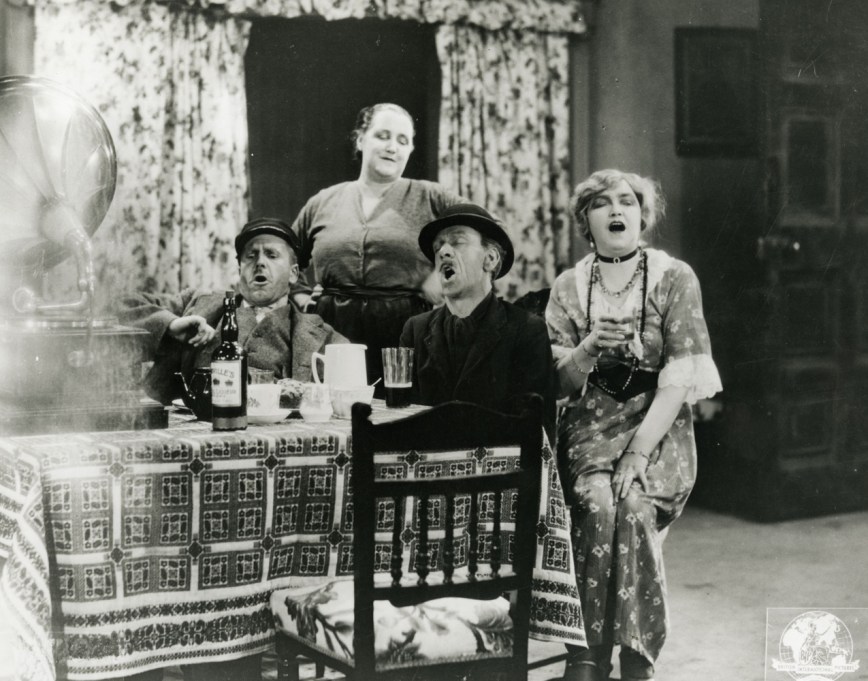
Laughed myself to sleep on the sofa watching Hitchcock’s ancient take (1930, I think) of the Sean O’Casey gem Juno and the Paycock. The characters are enchanting and the dialog is poetry, the stereotypes ring all too familiar and it is funny as hell. A darling film, it is, a darling film. As Fyl passed through the parlor I burst out laughing. What did he say? He said rest in peace. That’s funny? Well, he said it in Latin. But I thought this was an Irish play. Well, yeah but…. Never mind, she said. She stood there silent as the characters prattled on. You people never do stop talking, she said. Well, it’s not so funny in the original Sioux, I said. Though not out loud.

I highly recommend Juno and the Paycock though how anybody not familiar with the brogue could understand a word of it is beyond me. If so, I recommend picking up the Criterion DVD and either switching on the subtitles or listening to it dubbed in Spanish or Portuguese. Also, it is really great high with the sound off and Dark Side of the Moon on the stereo.

Seems I’m having trouble coming up with a comparison to wind this up. I’m terrible at this movie reviewing thing. You’d be amazed the things you do not learn being a jazz critic. However, it’s safe to say that Hitchcock fans will be disappointed. As will most of you English speakers, or anyone who saw Riverdance or wears Kiss Me I’m Irish buttons on St. Patrick’s Day. Think of The Informer but with lotsa laffs. Actually, now that I think about it, it is sort of like The Informer but with lots of laughs.

Hope that helps.

Juno and the Paycock.jpg

A little bit of heaven.

Jazz

I saw Monk at the Five Spot he said. He saw Trane at some little dive too. I remember walking down the street in Harlem, he said, and there was a piece of paper in a bar room window with a hand written George Benson in letters almost too small to read. Went inside for a beer and heard this young cat just burning on guitar. He was playing jazz back then. I can’t remember who was on the B3. I remember seeing Lee Morgan at the Lighthouse, the other guy said. Bennie Maupin was on tenor. The same band on the LP that’s playing now, listen. I listened: Bennie was cooking, then in comes Lee, solid. I remember the music was so good, he said, and Lee so right on and I was so happy and before I knew it I was drunk. I mean drunk. My ride had split, they were sweeping the floor and stacking the chairs and I had to walk home from Hermosa Beach to Inglewood. Damn man, how far was that? It was twenty miles. Hangover hit me about halfway there. He shook his head at the memory. But man, Lee Morgan sounded so good.

Dave Pell

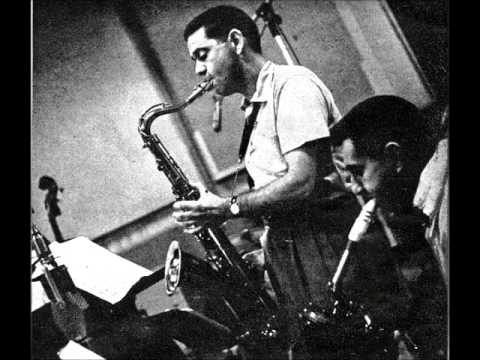
First show I ever saw at Charlie O’s was the Dave Pell Octet. Mort Sahl walked in and sat at a nearby table. Pell blew long, airy solos in a set of Lester Young. This is Prez’s horn, he said. I heard Mort Sahl tell someone that Prez had left it to Pell in his will. The band was swinging, precise, beautifully charted, a lot of Shorty Rogers arrangements, very West Coast. The crowd dug it. Everyone seemed to know everyone else. Out back in the parking lot silver hairs huddled, giggling and smelling of weed. We stepped back inside just as Dave Pell counted off a perfect Lester Leaps In. He crooked the horn at an angle, shut his eyes and let the notes flow.

Rest in peace.

Dave Pell

Tim Buckley

Tim Buckley’s “Get On Top” off his Greetings From L.A. is a flat out classic cut in the brickspicks.com corporate offices and would be everywhere if anyone ever played it again. Or even heard it ever. Too rock’n’roll, I guess, for people in a Tim Buckley mood, while the rock’n’roll people see the name Tim Buckley and rear away–it’s the dreaded singer songwriter genre. But this thing grooves in a tough noir way like Jack Nicholson dancing, and the lyrics have just the right coked out horny 70’s nihilism, like a Blue Thumb session gone bad when the drugs were edgy and paranoid. And while the mood is as wrong as any song could be in 1972, Tim Buckley could have stomped into CBGB’s with this about 1976 and fit nicely and no one would have noticed he was a hippie. Or could have, had he not been stone cold dead already.

Unlistenable pleasures

Somebody innocently mentioned a cactus being picked up by the wind and hurled at them. Which was bad enough, but someone raised the discomfort level by several orders of magnitude by responding with a YouTube of Cactus doing Parchment Farm. Egad. Perhaps you are unfamiliar with Cactus. Well, they were Detroit band you loved if you thought the Grand Funk Railroad live album was overly melodic, subtle and well crafted. Because Cactus dispensed with even a hint of melody, subtlety and craft. They were the Detroit sound after Detroit had burned down. I remember finding their their album Restrictions in a bin somewhere for fifty cents. I think it was their third, by which time they had shed any hint of musicality, and is one of the most gloriously unmelodic hard rock records of its time. 40 minutes worth of songs pummeled to death by drums and guitars and the most tone deaf singer ever allowed into a studio. I loved that album. Wish I still had my copy, if only to bother people. Anyone who partied at our place in the mid 80’s was subjected to it at ridiculous volume.

Alas, at some point I became a jazz critic and now find that record utterly unlistenable. But there was a spell there circa early-mid-eighties when somehow finding the loosest, rawest, trashiest music imaginable became of utmost importance to a select few of us. I remember Humble Pie’s rendition of Honky Tonk Women was an unlistenable pleasure. Makes me almost glad that not a single soul in the entire world, not even some tone deaf record collector in Germany or Japan or Brazil, has posted the Lee Michaels unclassic Roochie Toochie Loochie, off his forgotten Tailface, which even then I thought was one of the dumbest album titles ever. But if you drunkenly drove from the Anti-Club to our pad in the mid 80’s at two in the morning, you and our neighbors were subjected to Roochie Toochie Loochie at ridiculous volume until one of you complained.

Anyway, here’s a cut off of Restrictions. If you are at work turn the volume as high as possible right now.