Lawrence of Arabia

[Sometime last winter….]

So the color’s going on the television. Well, it’s gone, basically. I just tone it down and pretend it’s the fifties. Not a problem. I’ll get a new set one of these days. This morning I went looking for a hockey game. Nothing but golf. Not quite the same. I swept past TCM. A pair of guys clowning behind a camel, trying to sneak out of camp. I love these Road movies. Ruffians grab Bob and Bing by the feet and drag them from behind the camel to face Anthony Quinn. But it’s not Anthony Quinn. It’s Omar Sharif. I just mistook Lawrence of Arabia for Road to Morocco. Somewhere, on some other television, that sky, a bird’s egg blue, stretches north to Aqaba. On mine it’s just a soundstage at Paramount.

Claude Rains

Claude Rains could make any old story worth watching. When he gets going, in the close ups, with those tightly bound English passions ready to burst free of class restraints but never quite, in that tension, I don’t think there has ever been another actor that could pull that off with such intensity. He made everything believable. He turned The Invisible Man into a classic, made us pity the craven, cowardly, murderous Nazi in Notorious and has taken this scene now, in The Clairvoyant, into something out of Zola. Not bad for such a little guy. Even Fay Wray towers over him in their scenes together, and she was in flats. Then he sweeps her off her feet into his arms like she is made of feathers. Such hidden strength. He had entered the Great War trenches a private and emerged a captain. Mustard gas took an eye and his voice. The voice returned, huskier, grittier even, a peculiarly English sort of machismo that worked well with American audiences. It’s the grain he uses in his moments of desperation or gritty determination. Plots rise and fall on his damaged vocal chords. What left him blind and voiceless, stumbling about a trench on Vimy Ridge at the mercy of shells and the arc of machine guns helped make him a movie star, a voice so unique it tormented impressionists who could never quite nail it. I watch him in film after film, and wonder how much of Claude Rains was formed there in a Flanders trench, the dead stacked like cordwood, he sipping cold tea from a filthy tin while waiting for the whistle to attack again, his precious England an impossible one hundred miles away. Of acting he once said I learn my lines and pray to god, as if he was going over the top again with every scene.

Claude Rains--Notorious 1

That fear again, Notorious.

No Way To Treat a Lady

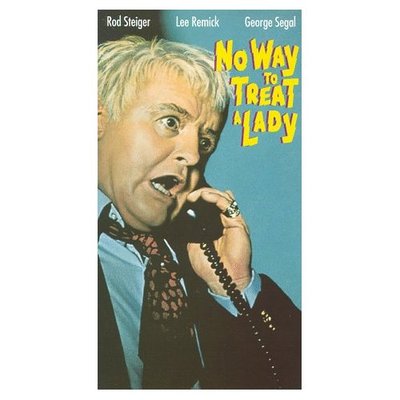
No Way To Treat a Lady, a real obscure little gem, New York City in the sixties, breezy and psychotic simultaneously, George Segal terrific, Lee Remick radiant, and Rod Steiger as Rod Steiger as even Rod Steiger could be, careening off the script like a saxophonist mid solo, his spontaneous take on a psycho killer doing a truly disturbing WC Fields impression being the height of something or other. Great Michael Dunn scene as well, and there is not a role no matter how minor that isn’t a razor sharp little chararacter study. It’s been popping up on some of the more obscure digital channels lately, passed off as film noir, which it ain’t really, rather it’s one of those sixties flicks mixing murder and laffs and romance that usually haven’t aged well, but this one has. Ciao! Ciao! Ciao! Ciao Bambino! howls Steiger into the phone, the script blown to the winds.

No Way to Treat a Lady

Gangs of New York

Finally saw Gangs of New York and I am amazed that Martin Scorsese directed such a stupid movie. It was terrible. If his name hadn’t been on the masthead I can’t imagine all those critics and film freaks making such nice excuses for it. It was basically a Blaxploitation flick with heavily stereotyped Irishmen instead of Richard Roundtree. A Micksploitation flick. Of course, Shaft’s Big Score, Foxy Brown and Slaughter’s Big Rip-Off never passed themselves off as genuine historical dramas. Scorsese, on the other hand, seems to swear with every shot that this is the way it all went down, right down to the slow mo. What arrogant pricks great directors can be.

Halloween flicks

Written late on Halloween night, 2013…

You can tell Halloween approaches…mountains of candy in the stores, grown ups in silly costumes on Facebook, and a perfect wallow of old Universal, Hammer and American International horror flix. The TV becomes heroin for a week, and I find myself fixing on the screen for hours on end. Real life dissolves into insignificance when Bela, Karloff, Vincent Price, the Lon Chaneys, Christopher Lee, Peter Cushing and a glorious cast of aged movie stars act up a storm no matter how absurd the story. Yesterday’s surprises were Joan Fontaine’s refined performance in The Devil’s Own (aka, in England, The Witches), though I passed out for a few minutes–it was way late–and awoke to a berzerk voodoo orgy with perfectly nice English people rocking out like a Busby Berkley production of Jesus Christ Superstar. Thankfully Joan put an end to it with a knife. The other delight was George Sanders as a wonderfully unctuous Satan masquerading as a butler in Psychomania. It’s late period Hammer and sub par, sort of a blend of A Clockwork Orange and Hells Angels on Wheels, though Americans will find it hard to be frightened by bikers who ride perfectly nice street bikes–no Harleys in Britain, apparently–and whose idea of terrorizing a small town a la The Wild Ones is rudeness interspersed with the occasional homicide. Still, I loved it. Great Hammer ending. They could be very creative with very little money.

Speaking of George Sanders–whose Addison DeWitt in All About Eve I based my Brick’s Picks persona on (seriously, I did)–his older brother Tom Conway was in a string of Val Lewton flicks, often getting his in the end, the cad. He certainly did in the Cat People yesterday afternoon, and in a fuck gone horribly wrong was torn to shreds when the gorgeous Simone Simon turned literally into a wildcat in the sack. Or would have, had they gotten there. One kiss and wow, all hell breaks loose, he screams, the neighbors overhear, the police are called, and poor Tom is there on the floor, crumpled and still. He wasn’t quite man enough…but you know those intellectual types, all talk. He walked with a zombie, too, last weekend. Incidentally, I Walked With a Zombie–which features an incredible soundtrack, vividly percussive–features in a smaller part the great calypso singer Sir Lancelot, who does the Greek chorus thing, singing tunes that give the background and predict the outcome of the unfolding tragedy. Splendid flick, one of my favorites. But if you like your zombies zombier, the classic White Zombie was on yesterday, with Bela at his most evil, and the scenes in his sugar mill dungeon are as scary as anything Universal put on screen in their glory days. Considering the year–1931–it’s a helluva picture.

Sir Lancelot in a zombie pic reminds me….will Dr. Terror’s House of Horrors be shown anywhere this week? You’ve seen it, no doubt.  A campy British classic. Peter Cushing is a weird doctor on the train, and there’s five tales, the most famous has Christopher Lee strangled by a disembodied hand–not his–that he himself disembodied. My favorite of the five is about a trumpeter–it’s always a trumpeter–who cops a tune from a voodoo ceremony and claims it as his own. Apparently voodoo priests don’t understand how jazz works and seek vengeance and the apple is thoroughly scrappled, indeed. The trumpeter is an actor, but the band is Tubby Hayes’s. Tubby Hayes was probably the greatest of the English saxophonists, and if you’ve seen Alfie that might be him ghosting for Sonny Rollins on the exceptional jazz score (Sonny himself does the official soundtrack LP, but union rules apparently required English musicians on the actual score and Tubby was on the session so who knows…jazzbos still argue about this.) Tubby had a bad ticker and didn’t make it out of the early ’70’s–I’ve heard stories of him lying down backstage between sets, exhausted by the effort of blowing his solos and obviously near the end. But it’s not Tubby’s end that is nigh here, it’s the trumpeter learning a lesson about stealing a black man’s tune that Led Zeppelin never learned. But then Led Zeppelin never stole a Haitian tune. Maybe Dr. Terror’s tale is why. Jimmy Page is an occult freak, and they take this stuff seriously. Mojo his lawyers could handle, but voodoo is a bit freaky….

Anyway, if you are a fan of classic sixties jazz and classic Hammeresque horror (actually Amicus horror, but it’s the same thing style wise) then Dr. Terror’s House of Horrors is essential viewing. Not to mention more fun than most jazz documentaries. Oh…it turns out that the band’s session–recorded at Shepperton Studios, no less–has been issued on CD.  I think it’s called Voodoo, and though I’ve never heard the actual disc it does feature that great tune the band plays that resulted in bad juju, and I don’t mean Wayne Shorter. Who probably loves this movie, actually. He’s passionate about old horror flicks. And ya know, one of my few regrets about resigning from the Jazz Critics Guild is that I never got to interview Wayne Shorter. I wouldn’t have asked him about jazz at all, just talked about old horror movies. A whole hour with Wayne Shorter talking about Dracula and Frankenstein and monsters. Spooky, creepy monsters. Trick or treat.

OK, the Children of the Damned are being perfectly rotten now, gotta run.
M

I’ve never before seen this 1951 remake of M. It is one tough, disturbing flick, set downtown in my fair city. Most disturbing thing of all is David Wayne as a psychotic child killer. David Wayne. Right after Adam’s Rib and before The Tender Trap. That same David Wayne. He blows a weird breathy tune on the tin whistle and looks at a little girl.

david-wayne-in-jospeh-loseys-version-of-m-1951

Krzysztof Komeda

Rosemary’s Baby has always creeped me out too much to enjoy, and of course the wife loves it. Nothing too creepy for her. I’d never watched more than bits and pieces of it, which means I missed the score in its entirety. Like just now Mia Farrow is trying to escape in the elevator and the music goes nuts with this incredible trumpet playing, crazy and dissonant and gorgeous. Wow. I had forgotten Krzysztof Komeda scored this, which I guess means that was his quartet, him on the piano and that was Tomasz Stańko blowing trumpet? Damn, I need this soundtrack.

Just a year or two later Krzysztof Komeda was in L.A. with a bunch of expatriate pals, just goofing around, drinking. Komeda tumbled and fell and hit his head. He never woke up. They finally sent him back to Poland, comatose, where he lingered and died and took all that creativity with him.

Now Mia, post partum, stricken, is screaming at the room full of old people. What have you done to my baby you maniacs? Komeda scored a drunken march here, and Stańko takes the melody where melodies are not supposed to go. God is dead, the old people chant, Hail Satan! The banality of evil. The story ends in a sweet sixties melody, a very continental pop thing of Komeda’s called Rosemary’s Lullaby, with Mia’s voice. It’s so melodic that the contrast with Stańko’s solo earlier in the scene is jolting, a melody rendered nearly dissonant by its own sudden sweetness. Rosemary, a good mother, reaches down to touch her gurgling baby, the music swells and fades, but a final note on the piano, dink dink dink dink dink dink, is left hanging, unresolved, just like this.

Krzysztof Komeda2

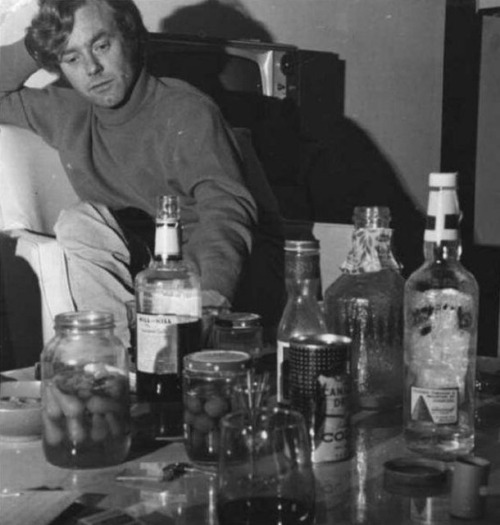
You see a photo of Krzysztof Komeda from 1968 and wonder what he was thinking. Perhaps nothing. Perhaps everything.

Cannes

There was a fascinating story in the L.A. Times today about the origins of the Cannes Film Festival (“What Cannes and the labor protests in Europe have in common”). It all began, apparently, as an anti-fascist response to the Venice Film Festival which had just given its highest award to Lili Riefenstahl for Olympia, her queasily beautiful paean to Hitler’s 1936 übermensch Olympics. The organizer of Cannes, Jean Zay, was a politician of the French left and former member of Leon Blum‘s democratic socialist government (or governments, Blum was prime minister three times as the nation went back and forth between left and right–French politics between the wars was insane, even by French standards). Zay saw the festival as the cinematic equivalent of the great French tradition of protest and revolution and streets full of workers and intellectuals and artists and red banners. He’d present films full of social realism and art and truth. He was later beaten to death for such insolence by Vichy thugs. But the festival survived him and evolved into a celebration of film and the filthy rich. Life does have its odd turns.

cannes_film_festival_0

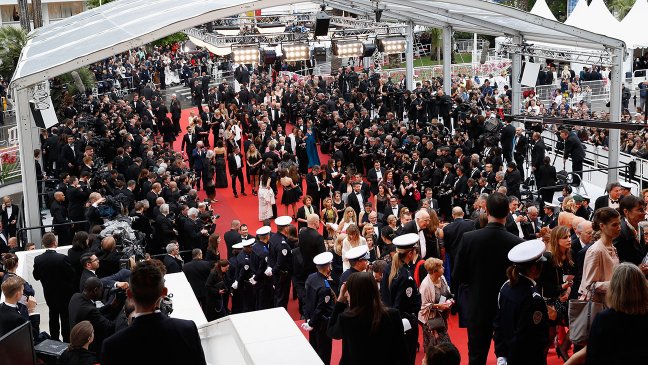
Rich people massing on the red carpet at Cannes in metaphorical revolution.

Andromeda Strain

Saw The Andromeda Strain again last night. One of my favorite science fiction flicks. Not only is it a helluva story with a hard science plot, but best of all one of the heroes is an epileptic. Probably the only time I have ever seen epilepsy genuine portrayed on the silver screen, or any screen:

Leavitt had a seizure.
What?  Why in the hell didn’t she tell us about it?
No top lab would have her if they knew. Insurance, prejudice, all that crap.
Sheesh….from the Middle Ages.

Those four lines nail it.

I remember seeing The Andromeda Strain in a movie theater when it came out. I was maybe thirteen and watched the lady scientist have a seizure and it was intense. Wow. There are people like that out there?

Little did I realize….

Anyway last night when Kate Reid, as Dr. Levitt, had her first spell–an absence seizure–I was asked what was happening to her. I don’t actually have absence seizures (and I am immune to flashing lights), hence I can drive. Absence seizures are called complex partial seizures. Simple partial seizures–most epileptics have simple partial seizures–are epilepsy without loss of consciousness. You’re still messed up in your own unique little way, strange symptoms and behaviors, you’re just wide awake messed up. I’ve had lots of those, nice and awake and aware. But with complex partial seizures you zone out of consciousness for a moment (or several moments). Or perhaps you are conscious, awake, but unaware of anything around you. No idea where you are. Lost. But in this first seizure scene, Levitt has obviously lost consciousness. She’s frozen, she’s out of it. She doesn’t fall down or anything, she just zones out and when she snaps back, she is momentarily disoriented. Kate Reid did a good job portraying a complex partial seizure, aka an absence seizure. Obviously Dr. Levitt didn’t drive.

An hour later into the plot, as all hell breaks loose, the flashing red alarm lights send Dr. Leavitt into a full seizure. I had several of those, at night, while sleeping, quite unsettling for somebody sleeping with me. Thankfully meds ended all that as they had seriously trashed my long term memory. Somebody asked me if Kate Reid’s was a realistic portrayal. I said I wouldn’t know, I wasn’t there to watch me. I was never conscious at the time. The brain is zapped all to hell during a tonic clonic seizure, which you probably know as grand mal (“big bad”) seizures. There’s no consciousness during a big bad seizure. The brain is having one hell of an electric storm. I was watching Forbidden Planet today for the zillionth time and when Robbie the Robot tried to take on the Monster of the Id his electronic brain goes white hot with electricity and shuts him down cold. Robbie had the robot equivalent of a big bad seizure. But if you’re flesh and blood (and brain), you only know you’ve had one because everyone around you is freaked out afterward. You wake up with no memory that anything happened at all, feeling quite blissful in fact, while everyone is staring at you like you’re Linda Blair in The Exorcist. And though it’s been years since my last big seizure, I’m so medicated, I still remember their expressions. So traumatized, so concerned, and I hadn’t a clue why. You had a huge seizure they’ll say. I look surprised. Invariably they’ll ask if I remember. Unepileptic people can ask the dumbest questions.

The next day, though, it feels like I pulled every muscle in my body. You never realize how many muscles you have until the day after a tonic clonic seizure. A lot of muscles. Muscles in ridiculous places, muscles that you can’t imagine have any purpose whatsoever but suddenly hurt like hell. But that’s the impression epileptics have of their own seizures. What my big bad fits actually look like I have no idea. So I asked my wife if Kate Reid’s portrayal looked like a tonic clonic seizure. She said yeah, that is what it looked like. Six and a half feet of me stiff as a board, shaking, making unearthly sounds. Then it ends.

Great movie, The Andromeda Strain. But sadly it remains the only film I know of that shows epilepsy exactly like it is.

A complex partial seizure.

A complex partial seizure.

The Trip

The Trip poster 2

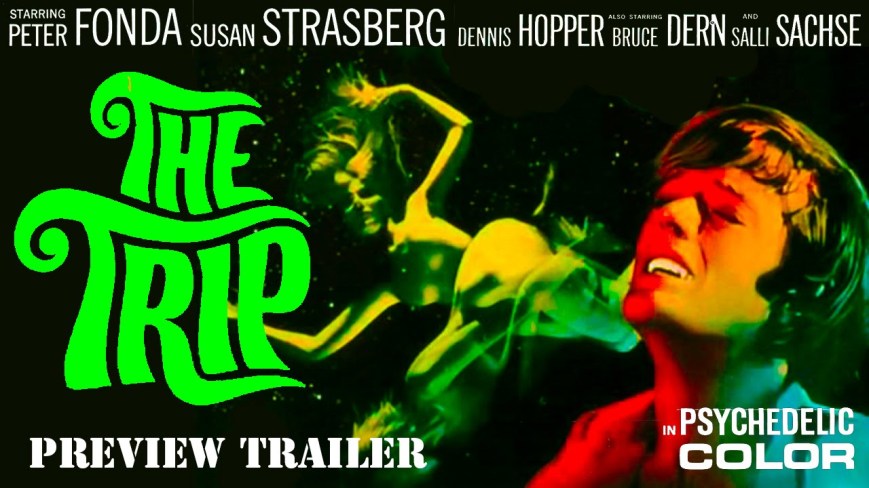
Sat down to watch The Trip again last night, the Roger Corman/Jack Nicholson flick with Peter Fonda, and about ten minutes in it dawned on me that I had never seen The Trip. How I do not know. Great psychedelic freakout turned free form jazz score with the Electric Flag, though the occasional bass line kept making me think it was Country Joe and the Fish. A living, breathing, uncharred Gram Parsons in the club. Bruce Dern with a frightening beard. Dennis Hopper being quintessentially Dennis Hopper. Plus women in strictly supporting roles, this being the sixties. Lots of psychedelicized screwing. Grooviness and paranoia. What’s with all the horses? I didn’t know LSD came in gel caps. Peter anxious. You’re always nervous your first time Bruce Dern says. Bruce Dern knows. He knows. The score gets hazy, eastern, psychedelicized. Peter coming on. Dig those crazy colors. Peter holds an orange. That’s the sun in my hands, man! Jack Nicholson wrote, Oh, it gives off an orange cloud of light that just flows right out over the sea! Bruce Dern smiles knowingly beneath that mammoth beard. The camera follows Peter. Peter one with the universe. Peter naked and freaking. Peter home invading in a creepy scene. Peter weirding out the lady in the laundromat, who steals the scene. Peter freaking big time. You’re stoned out of your mind, aren’t you, said the blonde waitress. Peter staring, child like. Peter must have gotten laid like crazy with that look. Now Peter smelling bacon, ditching the pigs. Peter lost in acid terror, finds himself back at Dennis Hopper’s pad. Dennis senses his trauma. I wish there was some hip way of telling you this, baby, he tells Peter, but, ah… you’re one with and part of an ever-expanding, loving, joyful, glorious, and harmonious universe. I think the police are after me, Peter says. Bummer. I got a house full of pot, Dennis says, you better split. Peter back on Sunset Boulevard. Chicks everywhere, groovy blonde chicks, Susan Strasberg even, dancing, giggling, balling. Free love, baby, when in doubt, fuck. Peter is in doubt. Peter is one with everything, yet not one with anything. Crazy sax blowing turns to flute exploration. Peter is down at the sea shore to let the waves wash his mind. In the gray dawn perfectly good breakers go unsurfed. This is so beyond Frankie and Annette now. Beyond Dick Dale even. The naked lady dresses as Mike Bloomfield plays some crazy blues figure on the guitar. She asks Peter about the trip. Did he find what he was seeking? Yeah, I’m hip about time, but I just gotta go, Peter says, in the wrong movie. In comes the Electric Flag, grooving over the credits. That’s it, baby. Self-actualization, rock’n’roll and screwing on the Sunset Strip.

The Trip--waitress

You’re stoned out of your mind, aren’t you?