Layla and Other Love Songs

Was listening to part of Layla and Other Love Songs tonite for the first time in a zillion years. I was digging the music (I wore out my copy in my impressionable teenage days) but all I kept thinking this time was how the hell did Eric Clapton get so hung up on one woman? The dude was a rock star for crying out loud. There were chicks for days who would have thrown themselves at him. He would have been piled so high with female companionship it would have looked like a rugby scrum. Well, a miniskirted, gogo booted rugby scrum, but you get the idea. There were that many babes and he was a guitar hero. More than a hero, he was God. You could read that on the walls, Clapton is God. Do you think Brian Jones would have let that slip by? Hell, all the darling girls remaining after Hendrix left this mortal coil (if he were ever on it) could have made most guitar players very happy. Jimmy Page was probably thrilled. Jeff Beck probably insulted dozens. A good guitar player merely had to reach his carefully manicured left hand out. But not Eric. No, he wallowed in unrequitedness. And the unrequisition was his best friend’s wife. The wife of a Beatle. Bell Bottom Blues, he sings, you made me cry. His solo thereafter is utter perfection. You could hear all that unrequited pain. Sheesh. Like what was good enough for every other guitar player in London was not good enough for him. Nope, he wanted the unattainable (then, anyway) and moaned about it over four sides of a double album. That’s not a torch, that’s a bonfire. I mean I love my wife but if I ever got that drippy over four sides of a record she’d kick me out of the house. There’s no point in being pathetic, she’d say. But then she never did like Derek and the Dominos. She was a Sex Pistols girl.

Fantastic record, though. Why does love have to be so sad, Eric moans, like anybody cares, the band is so hot, the tempo so fast, Jim Gordon’s sticks dance across the skins and the guitar interplay with Duane Allman is wicked. About a minute in Eric just takes off, fast notes, Buddy Guy and Freddie King merging in all that self inflicted despair, when just past the one minute thirty second mark Duane Allman joins in and it is, it is, it is something. How do you describe music like that? You don’t, not in words anyway. You just listen.

Television

I haven’t watched a new television show since a couple months of watching of Hill Street Blues. That ended when l no longer gave a flying fuck if they were careful out there. As people have stopped reading and television has become the most important thing ever, I am at a permanent loss as to what the hell it is everyone is referring to. On the other hand, I watch the science documentaries pretty much as soon as they are out. I may not know what show you are all talking about, but I know why deep down you’re nothing but a fish watching television.

These past few years, as people have gotten too poor to do anything else, watching television has taken on an importance I don’t think it’s had since the 1970’s, when we were all too poor to do anything else. Sometimes I think if it weren’t for rock stars dying, there’d be nothing cultural on Facebook at all. But that’s just being jaded. It’s impossible not to be jaded in Los Angeles, a friend once said, thoroughly jaded. I picked up the remote and hit the channel button over and over. Stop! another jaded friend said. Women were running about in next to nothing, beating bad guys senseless. He never misses this show, he said. For the life of me I couldn’t figure out why, aside from the obvious, which you could just as easily watch with the sound off while listening to Dark Side of the Moon. But we had the sound on and I don’t have Dark Side of the Moon anyway. Not that it matters, since my friend is really into the show. As he described the story line, my mind wandered and set my gaze on my library spilling out of its shelves behind him. A fish staring at a pile of books. Sudden movement gets my attention as an amazon woman karate chops one two three guys and does a back flip fifty feet in the air in slow motion. I watch. I did so automatically, against all better judgment. I could hear my frontal lobe protesting that the amygdala was getting its way again. It was no use. A half billion years of vertebrate evolution and boobs still trump books every time.

Bobby Hutcherson

R.I.P. Bobby Hutcherson. I remember seeing him play at one of the Vibe Summits. He was the featured artist and last on the bill. Maybe a dozen vibraphonists preceded him, unknown, well known, chops galore. Quite an afternoon. Then came Bobby’s turn. After a few minutes my wife said how come all the others didn’t sound like that? They didn’t. It’s like they were playing notes, beautiful, wonderful notes, and he was playing colors. Washes of colors. He painted while they played. And I never heard anybody thereafter who even came close to what he did. Bobby Hutcherson just had that Bobby Hutcherson thing down. And now he’s gone.

Bobby Hutcherson

Bobby Hutcherson. Copped the photo from the Jazz Times site, no idea who took such a splendid shot.

I’m eighteen

The wife just came in singing I’m Eighteen. Said they were playing it at Trader Joes and she, perhaps touched a bit by the long walk in the heat, had sung it aloud to the delight of the crew. Wish I’d seen that. As she wandered off into the kitchen a moment ago chanting like it, love it, like it, love it, it occurred to me that when that song was released in 1970, anyone eighteen then is sixty four now, bringing to mind one of the most unlistenable of all Beatles songs. I’ll spare myself that. Instead here’s I’m Eighteen, which all you sixty four year olds can sing along to as you chase real eighteen year olds off the lawn.

Scotch and wa-wa

So I tell the old Laugh-In joke, Goldie Hawn walks into a bar. Dan Rowan says you sure you’re old enough to be in here? Goldie Hawn says yes I am sure I am old enough to be in here. Dan says OK, what’ll ya have? Goldie says a scotch and wa-wa.

Everyone laughed.

So Helen Keller walks into a bar, I said. Bartender says you sure you are old enough to be in here? Helen Keller says yes I am sure I am old enough to be in here. Bartender says OK, what’ll ya have? Helen Keller says a scotch and waaaaaaaaaah.

Silence.

Shouldn’t that have been Patty Duke? someone asked.

Claude Rains

Claude Rains could make any old story worth watching. When he gets going, in the close ups, with those tightly bound English passions ready to burst free of class restraints but never quite, in that tension, I don’t think there has ever been another actor that could pull that off with such intensity. He made everything believable. He turned The Invisible Man into a classic, made us pity the craven, cowardly, murderous Nazi in Notorious and has taken this scene now, in The Clairvoyant, into something out of Zola. Not bad for such a little guy. Even Fay Wray towers over him in their scenes together, and she was in flats. Then he sweeps her off her feet into his arms like she is made of feathers. Such hidden strength. He had entered the Great War trenches a private and emerged a captain. Mustard gas took an eye and his voice. The voice returned, huskier, grittier even, a peculiarly English sort of machismo that worked well with American audiences. It’s the grain he uses in his moments of desperation or gritty determination. Plots rise and fall on his damaged vocal chords. What left him blind and voiceless, stumbling about a trench on Vimy Ridge at the mercy of shells and the arc of machine guns helped make him a movie star, a voice so unique it tormented impressionists who could never quite nail it. I watch him in film after film, and wonder how much of Claude Rains was formed there in a Flanders trench, the dead stacked like cordwood, he sipping cold tea from a filthy tin while waiting for the whistle to attack again, his precious England an impossible one hundred miles away. Of acting he once said I learn my lines and pray to god, as if he was going over the top again with every scene.

Claude Rains--Notorious 1

That fear again, Notorious.

No Way To Treat a Lady

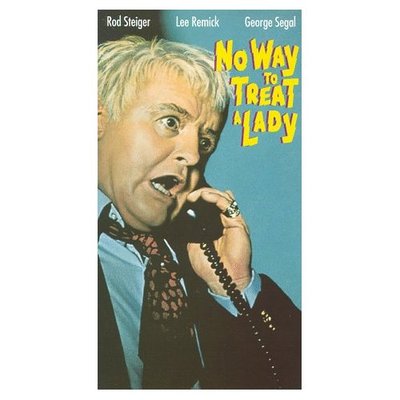
No Way To Treat a Lady, a real obscure little gem, New York City in the sixties, breezy and psychotic simultaneously, George Segal terrific, Lee Remick radiant, and Rod Steiger as Rod Steiger as even Rod Steiger could be, careening off the script like a saxophonist mid solo, his spontaneous take on a psycho killer doing a truly disturbing WC Fields impression being the height of something or other. Great Michael Dunn scene as well, and there is not a role no matter how minor that isn’t a razor sharp little chararacter study. It’s been popping up on some of the more obscure digital channels lately, passed off as film noir, which it ain’t really, rather it’s one of those sixties flicks mixing murder and laffs and romance that usually haven’t aged well, but this one has. Ciao! Ciao! Ciao! Ciao Bambino! howls Steiger into the phone, the script blown to the winds.

No Way to Treat a Lady

Epileptic eyes

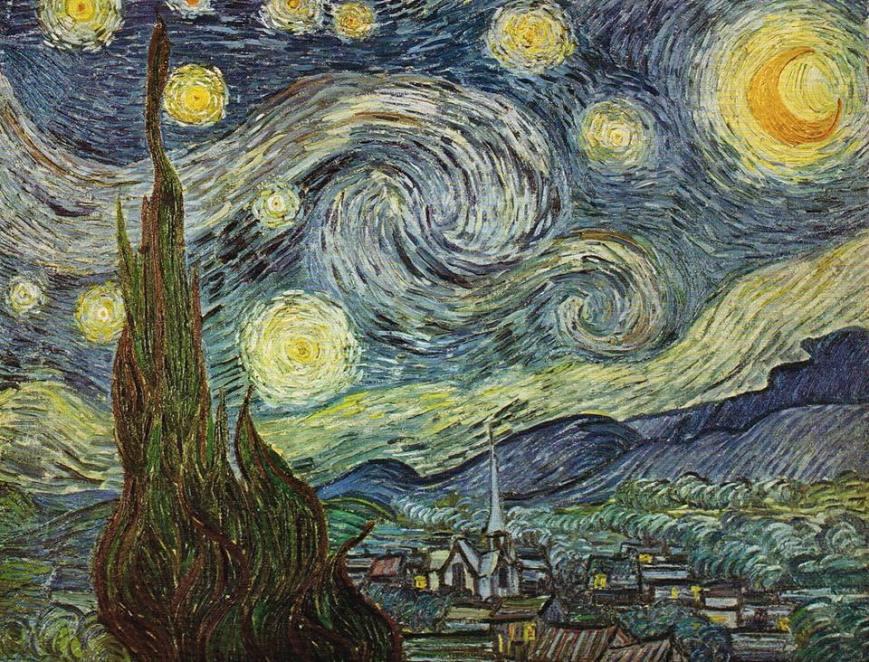
One of my favorite epileptics. The swirls are the auras, and the tree and behind it the steeple seem forward, as if placed in front of a backdrop, because of the flattening effect of temporal lobe seizures. Van Gogh makes no sense at all unless you can look at his paintings with epileptic eyes. If I delay my next dose a couple hours I can sit out on the sundeck and the scenery begins to look like that. It’s gorgeous.

That they don’t teach you in art class.

Starry Night

The Starry Night

I let out an involuntary you are so full of crap and switch to KPFK and listen to the paranoids plead for money.

(2013, I think)

I’m old enough now to have just used an AARP card at Denny’s. Twenty per cent off, which is a big help when you’re too old to dine and dash. I’m also old enough to find the Dinner Party Download on KPCC annoying. Not incredibly annoying, just grumpy late middle aged guy annoying. Get off my lawn, etc. But I listen anyway. Not deliberately, just if it’s on. Ever since the wife nearly died and I was left in a house potentially widowered for a few weeks back in 2008 I seem to need to have sound here all the time. Voices. I can blast instrumental jazz, of course, but when I’m wandering about doing chores or reading or procrastinating and the wife’s not around, I need voices. I don’t really need them, it’s just habit. And as it’s not annoying, it survives. So the TV is always on, or the radio, or the stereo. When the wife was in the hospital that solid month there’d be something on in every room here at the house all the time, radios, TVs, stereos, some idiot jabbering away on the computer. When you’ve been married forever silence is deafening. I used to talk to the cats a lot. Two would answer back, the other would just look annoyed. I said hello to the fish. To the plants. I don’t think I talk to plants anymore, but I still talk to inanimate objects, and the tea kettle hisses back, a trick I learned from my sainted mother that she learned from her sainted mother, bless her soul. I talked to the tea kettle a lot then. Drank more tea then I ever drank before or since, just so I could bicker with the kettle. I’ve even cringed through an hour of The Splendid Table, with that voice squeezing unctuousness like extra virgin olive oil. Only the metaphysical nonsense of On Being is completely intolerable. A newer New Age take on Alan Watts, lite and undrunk. Egad. I let out an involuntary you are so full of crap and switch to KPFK and listen to the paranoids plead for money.

Benadryl, Betty White, and the end of the American Dream

Written high on Benadryl….

Hay fever season….yesterday the allergy/arthritis synergy was at its peak, and I was on allergy pills all day. Alas, you can’t mix epilepsy meds and daytime allergy pills, so the wife was graced with sweet silence from her zoned out husband. I pulled out one of those Mill Creek Entertainment eight zillion classic television shows on 900 disc sets I picked up for a dollar somewhere and spent hour after hour somewhere between 1948 and 1960. The writers then had all been in radio for years, and were sharp and funny, and especially in the earliest days were writing for hip urban audiences–Bob Cummings quoting Voltaire, and in French. The actors, too, had come mostly come out of radio, or the stage, and many of the comics went back to vaudeville. An ancient Victor Moore (you’ll recognize him as the plumber in The Seven Year Itch) singing a jazzed up 45 Minutes From Broadway (the George M. Cohan tune he’d first sung in 1906) on the Ed Wynn Show in 1949. I’m feeling groovy he says, grinning, stoned without being stoned, following the ultra hip vocal quartet offstage. The be boppers must have loved it (though the silver hairs in the audience preferred it as he’d sung it earlier in the show, a gentle, almost stately waltz, with Cohan’s ragtime inspired tempos softened by time and nostalgia). The variety shows could be flat out surreal, fading actors making jokes about being reduced to appearing on television in subtitles they hold up on boards. It was a live medium–live broadcast at first, and then live in from of a studio audience–and the fourth wall was violated regularly so that at times the audience nearly became part of the show. The writers on The George Burns and Gracie Allen Show went so far as to remove the fourth wall and have George talk to the audience–both in house and out there in the dark–like a Greek chorus commenting on the plot, and he would also sneak off to tune in his television set to see what was happening in the scenes he was not in, talking to the audience the whole time, and sometimes phoning the characters to comment on what they were saying, to their confusion. All this within the classic show within a show premise that Jack Benny had introduced back in the 1930’s. It was all pretty avant garde and a far different sort of comedy than came out in the early sixties. There were no Gilligan’s Islands in the mid fifties, no Hazels or Petticoat Junctions. It wasn’t yet Newton Minnow’s vast wasteland…though you could see it getting there as the fifties ended.

And the ads were almost alien. The cigarette spots in particular were fascinating, if appalling, with beautiful models lighting up Pall Malls between courses and blowing the luxuriantly carcinogenic smoke into their loving man’s face. Camel citing leading throat specialists, they claimed, to show how mild, even healthy, a smoke they were. The relentless Eisenhower Era cuteness of Joyce Collins–who never smoked–singing the Lucky Strike song that seven decades later can still get stuck in your head for hours. And then there are the cars ads, wow, the apogee of the automobile,1955-59, these huge gorgeous cars devoid of seatbelts gleaming in the sun and dappled in the shade. My word, those interiors were so roomy, almost cavernous. How many of us came to be in the back seat of one of those? I can tell you we weren’t thinking of baseball at the time Danny Thomas said to his kid in one of those startling double entendres in a Make Room For Daddy that made it past the censors in the fifties. There were lots of those. How boring a date would be with a girl that says nothing but yeah all night said George Burns. Mr. Paley (the CBS chairman) came into my dressing room with two glasses of champagne and said bottoms up…and what an uncomfortable position that was said Gracie Allan. Bob Cummings was a completely cynical horndog in The Bob Cummings Show*, a show which I don’t remember ever seeing. Funny show, and out his window past the bevy of models with legs for days the sign across the hills still read Hollywoodland and later I recognized a two laned Los Feliz Blvd. You live in Hollywood you look for those things, the car chases that whizzed past your street before you were even born.

Sometime past midnight I woke up on the couch and had no idea what time it was, let alone decade, and it occurred to me through all the antihistamine that people were watching this show in this very room when it was new, and looking out the same panes of glass (they are so old the glass has flowed downward and distorts the view), and perhaps someone in them acting like an idiot had been at one of the hip Silver Lake parties here and left the stains in the ancient wood floor uncovered when we tore up the carpeting (there were ancient tacks in the floor from the 1930’s) and drunkenly dropped the cigarettes that left scorchmarks a half century later. I reached for a Pall Mall but there were none (do they even make them anymore?), and all the people I can remember who smoked them are long dead. On the screen there was Betty White, impossibly cute, telling her sitcom husband that when she is 95 years old she’ll be something or other, I can’t remember what. I was just struck by the fact that Betty White actually is 95 years old now, a realization that zapped me back into 2016, and I sneezed.

Wow. Somewhere between thick skulled William Bendix’s cozy union job in The Life of Reilly and today that whole middle class world disintegrated. Unless the characters were rich–John Forsyth in Bachelor Father, for instance–none of the premises of any of those shows would make sense today. That was my parents’ world, the World War Two generation. Since then we’ve stopped smoking, and we have seatbelts in our cars, but we’ve screwed everything else up as far as the standard of living goes. These middle class people goofing around in those sitcoms seem impossible now, unreal. They bask in economic security. Their place is assured. Nothing was left to chance then. Barring the prospect of nuclear annihilation, it was all dull, predictable and secure. Imagine that. But you can’t. That brief interregnum of widespread middle class security between the end of the Depression and Reaganomics was perhaps the one time in American history since the middle of the 19th century that the economic pyramid was flattened and ballooned from the middle. To have begun then–I was born in 1957, the peak year of the baby boom, we were born like rabbits that year–makes today’s reality that much harder, and nostalgia far too easy, almost narcotic. It’s no accident that nearly 50% of patients being treated for opiate addiction today are between fifty and seventy years old…up from 10% twenty years ago. You can imagine them high, on the couch, watching old syndicated teevee shows. The advertisements are aimed at them–reverse mortgages, payday loan sharks, ambulance chasers, miracle products that will patch up all the old things in the house they can’t afford to replace, then back to the old television reality where everybody worked forty hours a week with benefits and lived in houses they could afford on a single salary.

I got a taste of that narcosis yesterday in a fun and feverish, zoned out achey anti-histamine day, reliving 1950’s America. The last thing I remember was Betty White in some fluff called Life With Elizabeth, and I passed out in a perfect residential neighborhood somewhere in the San Fernando Valley, circa 1954. I woke up hours later, put the last disc back in the box and put the box back, way back, out of reach.

Watching television, c. 1955. A set like that would have cost around $200, or nearly $1,800 in 2016 dollars. Television was very much a middle class accessory, and as the middle class expanded in the Eisenhower era the audience expanded. What had been a play thing of the rich in a few cities in the mid-forties became the main source of entertainment and information for Middle America by the end of the fifties as people bought sets with their good credit.

Watching television, c. 1955. A set like that would have cost around $200, or nearly $1,800 in 2016 dollars. High end sets ran about ten times that.

Notes: Continue reading