Wild Stares

(Almost Perfect Sound webzine, 1992)

The Wild Stares are on stage.  It’s downtown LA, in the depths of the local art scene, in a room of almost antediluvian dinginess, from which at least half the patrons have fled–some to adjoining rooms, some to the bar, and a few right out the door.  Still, a couple dozen people remain in the small area in front of the stage, fascinated.  The music washing over them is a difficult blend of melody and discord, passages of straight forward song writing and strange constructs of odd time signatures and harmonic theories dredged out of an advanced musicology text.

Justin Burrill is putting away the strange bodyless thing that is his guitar.  “I’d say it was a great audience response considering nobody had ever heard the set before” he says.  His bony features, close cropped skull and all neck instrument are about as far from any popular image of an axman as one can imagine.  He seems to pull sounds out of his instrument by alternatingly strangling it or pounding out almost punk rock chords. Yet he has that experienced, incremental way of viewing their live performances–his career–that can only come with a long history of plying the underground scene.  Outside these dingy walls, there are blocks of lofts inhabited by artists who dream of NEA grants, patrons, and wildly inflated price tags.  But in the confines of Al’s Bar, success is measured by how many people stuck around.

“We played Seattle once” says Steve Gregoropoulis., the singer/composer/frontman for the group. “We played with a bunch of mosher hard rock bands.”  Somehow, plaid shirts tied around the waist and the Wild Stares don’t seem to go together.  “We blew up a huge PA.  The soundman got some sort of effect stuck in the system, like a violin sample or something, and it kept coming round every fifteen seconds and was absolutely deafening.  Finally we turned off all of our gear”–amps, synthis, drum machines and all–“to prove it wasn’t us.  By that time most of the crowd was gone.  It was pretty pathetic.”

Of course disastrous gig stories always make for better print, and the band revels in them.  Bassist Fran Miller–the angry one–is a storehouse of all the terrible things that has happened to the band, whether in print, verbally or physically–over their almost fifteen year career.  Perhaps it is their Boston roots that brings a certain good natured edge to their gripes.  And maybe that too accounts for the stubborn streak that has kept them going all these years well shy of any sort of widespread acclaim, even by underground standards.  It must be a stubborn streak that makes these guys go on and on doing the music strictly their own way, without any attempt that any fan can detect, to make it more easy to swallow for a larger audience.  They have no problem with signing to a major label, should a deal be magically proffered.  “We’re always trying for it” they say.  The problem is that they are the Wild Stares, and to alter their sound for the likes of somebody else would make them not the Wild Stares.  It is hard to tell if the very concept has ever been discussed.

What about Sonic Youth?  Fran dismisses them as “the luckiest people in the East Village.”  Justin says he has “a certain respect for them because they stuck with it–I saw them way back in 1980 when they were a really incompetent art band–not incompetent musicians playing art music, but an incompetent art band.  They were one of those millions of bands who wanted to be exactly like PIL, but were light years away from being able to do it.”

Steve, though, is effusive.  “They are fucking heroes!  They managed to be an alternative weird band and managed to have a career and play stadiums.”  The band all looks at him–this is an old argument.  Steve continues “You can’t take it away from them–there may be other noise bands, and there may be a whole cliché about that kind of music, but they managed to make it into arena rock, and no one else did.  And they are a great band and make great noise records and play stadiums.  They managed to persevere where everyone else failed.”

Fran looks up.  “Kim Gordon stole my look.”

Well, the Wild Stares have persevered just as long–even longer–than Sonic Youth and though one hates to use the word failure, success in any commercial sense eludes them.  One would assume that any band still around half way into their second decade must still be running on the rush of once having been pretty big.  So the Stares had a big following in Boston?  “We were always kind of despised by the community at large, actually” replies Steve, matter of factly.  Fran explains:  “It was more than just, ‘Oh–we’re not really into them’–a lot of people took an actively hating stance.  They wanted to destroy us, wanted us gone, wanted us dead.”

Steve takes it further.  “Whatever you might say about our relationship with people in Los Angeles–which can actually be OK–it is nothing like the sheer unbridled animosity that we felt in Boston.  It probably culminated when we played the largest place in town with Flipper under a barrage of insults and spit and on top of that I was misquoted in the Boston Globe–“.  Fran cuts in “–You actually did say ‘this is for all you fucking bowling ball heads”.  “OK” sputters Steve “I called them bowling ball heads and bourgeois swine.”  And though they could have done without the gob, being outcasts was a healthy thing for the young Stares.  “That’s probably why we’re still around, actually” says Steve.

Such a nasty response from the locals was ironic considering that the band was at the center of the DIY efforts of the time.  Their own label, Propeller, was one of the first in New England, releasing the Stares and many other seminal Boston acts (including Christmas and the great V;).  “We started in Boston long before Dinosaur Jr. walked the earth” says Fran.  In fact, it started with Justin and Steve under a different name in High School–“we actually played a sock hop once–we were invited and we played one song and it lasted a half hour and had two chords; Justin played the cello and I played piano, this was the late seventies, and that was where we got our first taste of popularity and it was like heroin to us, we couldn’t put it down and after that we have been basically doing the same thing for our entire adult lives.”  A bunch of precociously intellectual kids into John Cale, especially, as well as the Velvet Underground, the Kinks, Mott the Hoople, Patti Smith.  “We thought that hey, the Velvets managed to make a living doing this” and they all laugh.  Once the Wild Stares were formed, however, “we didn’t have any influences”.

Steve tries to explain:  “Justin and I are from the East Coast and there’s this predominant philosophy there that if anything is good then nobody’ll like it.  We always thought that if anything was really unpopular then it must be good.  It’s probably down in our subconscious somewhere.”

Justin agrees.  “I’m sure it is.”

Steve continues.  “I used to resent it when I was a kid if people liked things that I liked.  I used to really resent the Syd Barrett cult–like all those people don’t understand Syd Barrett the way I do.  I still do–you gotta sort of feel that way about the things you really like.”

A philosophy like this guarantees a band a lonely path.  Asked by the Boston Herald way back in 1986 why the Stares didn’t really compete with Boston’s other bands for crowds and popularity, Steve explained “It’s not that the world is a problem– it’s that what we do is a special thing. That’s why we do things on such a guerilla level.”  There were self-released singles and compilation tracks, even a flexi stuck in the pages of New York Rocker.  Their 1985 12″ Tricking the Future is a great slab of completely unconventional rock, with at least one track, “The Perfect Bash”, with it’s surging beat, razor edged guitar and wailing vocals, being a classic.  But still, the hometown crowds were thin.  “Boston was very funny as our popularity would go in cycles” Justin explained, “it would achieve critical mass and then the animosity would start to build again.”

“One of our best shows was when we went to Europe” adds Fran “and gave this big going away party and we had champagne and  people loved us that night.”

Steve shakes his head.  “Yeah–everytime we did something like leave town then people pretended to like us.”

Fran agrees.  “We were like Indian pudding–that’s this Holiday concoction from New England that my grandmother would make every year and my grandfather hated it–one year my grandmother decided not to make it and my grandfather, at the table, asked “where’s the Indian Pudding?” My grandmother said–“you don’t like it.”  “Yeah” my grandfather replied, “but I like seeing it around.”

Fortunately for the Stares, Europe was only a flight away.

Once in the old country, they rented a Ford Fiesta to stow their gear and their friendly drum machine, contacted a few bookers (one was so crooked that the Exploited sat on his steps for weeks waiting to kill him, Steve remembers) and began the first of several free form excursions across the continent.  The gigs were often small, the accommodations primitive, but the response was enthusiastic.  They tour carried them from London (where Justin met his wife, Suzell) through France and and as far east as Budapest, but it was Germany where they played the most gigs, made the most fans, made the biggest impression.

For in Deutschland the band had struck a nerve.  Their press kit is full of reviews that even by the normal Teutonic standards of hyperbole seem to evoke a disturbed sense of awe:  “The Wild Stares, whose complicated drum machine rhythm patterns, synthi and guitar together make a strange, undanceable noise-music”….”The guitar hisses and howls from left to right and around in circles, while underlying all is a trembling, nervous machine beat like a swarm of bees settling in your stomach”….”Life in the Big City as a nightmare, confused, a maze.  Only for those with strong nerves–this is America’s other future of rock’n’roll”….”Anarchic noise as heavy psychotic Neuroses-Chaos, powerful and sometimes almost unbearable”….”It is an unrelenting ferocity that has been pressed onto this vinyl–splintered, heavy, undanceable; sounding so nervous and miserable. The rage and dissatisfaction in every song have wrung out almost every remedy, so that what’s left is convincing paranoia.”  All this about a band who have insisted, over and over, that “we are not intentionally weird.  All our songs sound like pop songs to us.”

For a self-proclaimed pop group, the band collectively has a lot of musical schooling.  Steve majored in composition, Justin in music.  Drummer Kyle did a few years as a percussion major.  Only Fran decided against a music major.  Modern music comes up, and inevitably, Schoenberg.  Steve loves him, while Kyle says scornfully that he was the man “who brought mathematics to music.”  Since Steve does most of the composing, does he try to apply Schoenberg theory to the music of the Stares?  “No…well, that’s not true–I’d be lying if I said I didn’t” confesses Steve.  “It’s gets in there all the time” cuts in Kyle.  Steve takes a breath.  “It’s kinda complicated and will make a very boring part of the interview but for the last three years I have been motivated a lot by pandiatonicism, which is like a lot of early and pre-Schoenberg as a way of listening to music–the idea of spinning sort of resonance-based overtone-based harmonies for things that are complicated and can really be dissonant but are still based to some degree on resonance and I know it sounds idiotic when I’m saying it but it’s pretty much behind all the music I’ve written the past three years and it pretty much still is.”

How about an example?

“‘Like A Sparrow’, from our 1990 demo, was the first one written with that in mind, where it’s like all notes of overtoned-based ‘tonality’ that have equal value and then can modulate by any movement of a half-step into another bunch of notes that can stack up as far as you wanna stack ’em.”

But all this is done in the construct of a rock song?

“It’s not so constructed as all that” says Steve, “it’s not so intellectual as it is when you describe it.  It’s just notes when you play ’em.  It’s a lot easier when you play ’em.”

“It’s not like Steve comes in with the score with all the parts written down for us” adds Fran.  The band is visibly uncomfortable talking about music this way.  Finally Steve complains:  “This is making us seem really stupid–‘The Wild Stares Discuss Pandiatonicism’.”

This “Like A Sparrow” was a staple of the Stare’s set for a couple years–it’s a slow piece, a ballad, really–set to an oddly mechanical lurching syncopation, a melody that seems somehow infuriatingly off, graced with Gregorian chant-like harmonies.  Steve alternatingly sings and screams the lyrics “You’re sinking faster than a stone” etc., till it trailed off into a suddenly emptier club.  It’s a brilliant piece, really:  weird, almost beautiful and pandiatonic as all hell; the kind of song that’ll drive out the rockers and lightweights and casual drinkers, leaving a detritus of arty types, “serious” musicians, curious college kids and friends of the band.  And the Stares are unrelenting.  “Seven Uncharted Seas” rolled off a great little Charlie Watts opening on the drums into some vast, apparently happy rollicking pop number with Steve chomping out big rhythm chords as Justin spun out strange notes as if off on his own, till he suddenly rips into a great rock’n’roll lead, the entire thing backed up by Fran’s gusty harmonies.  “Motordrive”, driven along by the handclap/drum machine beat, is a surging industrial piece punctuated by Justin’s odd choice of chords.  Somehow all these songs avoid easy classification into any specific genre, but rather seem crafted with the “desperate eclecticism” (as Kyle calls it) of several very musically sophisticated people who happen to find themselves in a rock band, playing to a rock audience.

But then the band doesn’t think they sound, ah, weird?  “To me we don’t sound weird at all” says Justin, “but people have told me we sound weird.”  Steve explains–“I don’t think that people think we sound weird. We’re just kind of demanding.”  Steve had said long ago over burgers at a Silverlake barbeque that he feels that the Stares play a rather challenging style of music that most people, frankly, will not like–but then their job as a band was to go out and find the audience that will like the music and play for them.  As for the rest of the people, he says “We’re having fun up there, but we don’t so much show everyone else a good time.”

“It’s definitely not a party band” says Kyle, “and that’s the main problem with the club scene as far as we are concerned.”  Or as Fran puts it–“We’re not the kind of band that develops a big club following, because we don’t go out and play parties–we don’t twist.”

Well, almost.  “They ballroom danced to us in San Francisco” Kyle points out.  “We are not really a dance band– but we are not anti-dance.  Frisco proved that you can dance to the Wild Stares.”

Ballroom dancing, pandiatonicism, playing cello at a sock-hop–something is terribly out of synch with the typical “underground” musical trends.  Even Steve’s vociferous opinions on lyrics–“We hate bands with terrible lyrics.  They have no shame about them.”–are just part of an overall philosophy guaranteeing abstruseness.  As he explained in further detail to the German magazine Spex, “A good lyric must be full of holes, so that it can be appropriate in any situation.  That’s what I like about Dylan, the Fall.  You can always think about what they write and know what they mean. You can analyze it and get nothing.  Neverless they are precise.  That is actually what is good about rock music.”

Kyle links it all with another perennial Wild Stares problem. “It’s just the nature of the music that people are not gonna enjoy it much for a night out unless they are familiar with it beforehand–and I think that the solution is to have it on record so that people can listen to it whether they like it or not.  They don’t have to come if they don’t like it.”  Of course–the Wild Stares are notorious for their refusal to do any material which they have already recorded (and that’s just recorded–let alone released).  By the time a potential club goer has picked up a Wild Stares release and listened to it and maybe even liked it, they will not be able to hear it live.  Ever.

Which in turn brings up the Curse.  It seems that all the plans to release Wild Stares material come to delay and/or grief.  Fran, who will regale you with the details of each doomed effort with all the energetic fulminations of the most outraged New Yorker, attributes it all to some curse placed on the band long ago by some unknown agent, and so used to delay and record company failure has the band become that they seem to figure the workings of the curse into their plans.  It’s not for lack of recordings–ask to hear some of their recent output and you will get a stack of demo tapes that reel of their recent history–the 1990 demo, the 1991 demo, etc.  Land of Beauty, the brilliant CD just released earlier this year on Ace of Hearts Records had to be subtitled “Los Angeles, 1989” as it had taken the Boston-based label that long to put it out.  The label naturally had qualms about the addition but the Stares had to insist as they no longer perform any of the material on the disc.  It’s more than a little unfortunate as the title track, for one, is a real stunner, but then the Wild Stares are as stubborn as they are prolific and playing material they’ve already played who knows how many times would only leave out newer songs.  And they don’t so much play songs as they do a set–and about every year or so they learn an entirely new set. Which of course means that their audience must get used to a whole new batch of songs. Even, perhaps, a whole new style of songs.  As Steve told Flipside, “We have continually changed our style–it’s never the same.  I’d like to think that we don’t sound the same as we did a year ago. That’s what makes it possible for a band to exist for a decade, really….  The band has a life of its own–it’s an entity, an infant, continually learning its first few things.”

A trip to a Wild Stares rehearsal had them in the middle of birth pangs, working on the new set.  Their space is in a classic old office building that could have housed any number of film noir detectives.  The window gave a beautiful view of the Hollywood skyline and the big, glowing BMG sign.  Steve arrived first and turned on all the buttons and switches of his MIDI unit and it beeped back and played one of his newer compositions.  Hearing a Stares song in its most skeletal form is a bit disconcerting, as it sounds absolutely nothing like the multi-layered blasts one is used to.  He hits a few more buttons and in comes the drum machine and washes of synthesizer and various samplings.  As the rest of the band files in he switches the buttons off again and picks up his battered electric guitar and strums out, slowly, the chords to–of all things–Neil Young’s “Powderfinger”.  The others slip behind their instruments and join in, and so begin a long medley of Neil Young tunes to warm up.  No funny, arty renditions, either; this is just a rock band jamming a little to loosen up.

A break for business.  Fran pulls out a fax from their German label.  The CD is already past due.  In stilted, formal English the fax pleads its case–profits this year are way down and the cash is simply not available to put out the album now or at anytime in the foreseeable future.  “Whatever you can do on your end will be most helpful.”  The band looks at each other.  “What can we possibly do on this end?” asks Fran, “They are the label!”  Fran had called and found out that the label owner was temporarily residing in the Oberberg Clinic.  “The mountain air does a lot to clear your head” he’d said.  Steve makes a Magic Mountain joke.  “This is our second record label guy to have a nervous breakdown” points out Justin.  “I don’t know what it is” Fran adds, “we make Germans nervous.  People that choose to work with us for some reason are immensely imbalanced.”  Coming as it did so soon after an English record deal had blown up one would have to surmise that the Curse was still in full effect.  But then that was business and they were here to make music.  Picking up their instruments, they begin working on the new set.  It opens with “Limelight”–good, energetic, almost pop and laced with some of Steve’s patented lyrical oddities (“Now I’m not saying that the disappearance of art festivals is entirely a good thing” and a chorus of “Now I’ve got diamonds/I’ve got nails/I will not drive ’em into your arms anymore.”)  Next number comes a slow ballad, a bit reminiscent of “Sparrow”, that in classic Wild Stares form starts out a little hesitatingly, then builds to a powerful chorus, and fluctuates like that on and on.  Neat, high almost sweet harmonies from Fran.  Kyle’s drumming gives a whole new feel to this type of material–a living, percussive presence atop the sequences.  Indeed, on his own contribution, “Sleep is Bliss”, with its Brel feel, the drums and drum machine weave together into an almost hypnotically shuffling rhythm.

Another has a funky sequenced opening that suddenly turns into a brilliantly strange tune with Steve singing in a falsetto as Justin does little oddly near eastern leads and the sequence track lays down what the band insists is a “techno” beat.  Actually, only after some intense listening can one detect anything techno–but then what the Stares hear and what the rest of us hear is totally different.  Furthermore, in the Wild Stares scheme of things, just what we hear is quite irrelevant, anyway.  Oft times the Stares seem to be using a lot of ordinary rock or pop conventions, but using them, ah, differently.  They will readily abandon the usual time signatures and chord progressions but the songs are not really weirdness for its own sake but rather honestly different ways of writing material.  Whatever way the logic of the particular composition demands is the way the arrangement will follow, without much adherence to the time honored and comfortable.  They play it as they hear it.

Past the band and through the window, lights flick out one by one in the big BMG tower.  The band hurls itself into “Lucretia Borgia”, a soaring piece with an instrumental break that roars like a subway tunnel.

A German reviewer described a Wild Stares show for Spex magazine back in 1988. Its sheer volume surprised him–on record, he explained, one does not get the full impact of all “these manufactured distortions echoing off the walls. The singer, “Steve Gregoropoulos, the Terrible Greek, Bad Boy of Poptown Boston” was like some forsaken tiger roaring through a jet turbine; and his bored stare was unnerving. There was something wonderful about how his strange lyrics “so weak and fragile, kept hurling themselves against the Moloch, and yet time again emerged victorious.”  Most of the audience got nothing out of this and had fled to the lobby.  Set over, our reviewer tries to figure it all out.  The band reminded him a little of Big Black–the drum machine, the electronics–but Albini’s outfit was so angry, so insulting, so over the top; and the similarities seemed to fizzle out.  There was something different about the Wild Stares–behind the “noise facade” was simply creativity, the love of making music.  But such music?  He thought back over their set, their songs, and then it came to him in a little burst of poetry:  “Ihre Hirne haben Melodie, zu horen unter dem Larm der Knochen.”

Or as we might put it, in their heads is the melody of the noise of the streets.

Sandy Duncan’s Eye

(I can’t remember the name of the magazine, but it was 1992)

Sandy Duncan’s Eye are making a point.

The band just played a big West Hollywood show, for which they were offered a less-than-magnificent one hundred dollars.  They refused the money.  Were they offended?  Didn’t they need the money?

“That’s not the issue” patiently explains Roberto, bass player and singer and currently unemployed.  “As a band, we just don’t want to go through all the trouble of dragging out our gear on weeknight to just go down to some sleazy Hollywood dive for the standard Hollywood hundred bucks.  That kind of money, really, is nothing to a band–certainly not to this band.  We can go out of town and get a lot more than that and probably have more fun besides.  So if we’re going to play in town here, we want to achieve something more than just a few bucks apiece.”

So they turned down the money.  But what, then, did Sandy Duncan’s Eye get in return for playing for free?

“We had requested that a few conditions be met” says the soft-spoken drummer Campbell.  “We made it an all-ages show, which is unusual in Hollywood.  But we’ve built up a considerable following with the under-21 crowd, and they always have a certain energy that the audience will lack if they are excluded.  We also wanted it to be a cheap door price, like only half the usual $10 cover.  That way a lot of people who cannot really afford those high cover charges can get in.  And finally, we wanted to pick the other bands on the bill–good bands, new bands, that have something in common with Sandy Duncan’s Eye and with our fans.  Oiler and Beekeeper are just that.  Normally, it is almost impossible in this town for new bands like them to get on a bill like this one.”

So how did it go?  “I think we were successful,” continued Campbell.  “A lot of people showed up and saw a show that was better, overall, than you would normally expect in a club like that–a lot of people who are normally excluded from such places because they aren’t old enough or haven’t the money.  I think we got something of far more value that night than just another hundred bucks.”  There was clearly a hint of pride in that statement.

Maybe since such commercial selflessness is the stock in trade of Fugazi this may not seem like anything new.  But this is Hollywood.  With its zillions of bands willing to sell out anything for that bit of the spotlight, even a hint of altruism is too often seen and set upon as nothing but weakness.  And then in this depressed local economy, the notion that an out-of-work bassist would turn down a hundred dollars of good smoking money seems, on the surface, to be downright nuts.  After all, Sandy Duncan’s Eye are hardly rock stars.  In fact, after seven years of slogging through the underground they are just now beginning to acquire a solid local cult following.  With a pair of Flipside CDs under their tightly pulled belts and a SubPop single-of-the-month due soon [actually–only one of the CDs was released], any kind of exposure to the “alternative” audience must be welcome.

“Not necessarily” says Campbell.  A hint of a sigh gives away his frustration with a question that seems to him to have so obvious an answer.  “We are very serious about playing only the kind of shows that we comfortable playing.  We haven’t been Sandy Duncan’s Eye all these years just to throw our values out the window when the chance to play at some fancy club with some hot ‘alternative’ (he spits the word) band arises.”

Recently they played a gig midway up the bill at a very well known Sunset Strip establishment, opening for one of Seattle’s better known punk bands.  “There we were drinking beer out in our van,” says Campbell, “and it was raining like crazy and we were thinking that if we weren’t playing and didn’t have to be there, would we as individuals have gone to a show like this?”

Roberto explains.  “Look–the parking sucked.  The cover was way too high and the beer way too expensive.  None of us really cared all that much for the other bands on the bill.  And it was just pouring out.  We all agreed then and there that none of us would have gone to that show.  So we don’t want to do that again.  We’re determined that we will not play shows unless we feel we are achieving something important, besides making money, by playing.  That’s not why we have gone through all the hassles of being in Sandy Duncan’s Eye in the first place.”

One wonders just what it is that has kept them going all these years, toiling in obscurity, an obscurity they have grown to appreciate so much that they go to unusual lengths, it seems, to nurture it.  After all, their heavy-crashing-industrial-damage-punk-catharsis-whatever is suddenly verging on the commercially acceptable.  Not that they have altered it at all–anyone who has seen them over the years has to admit that though their playing is better, the dynamics richer, the sound perfected, it is still just Sandy Duncan’s Eye.  Roberto hunkers low over his long-strapped bass, his voice resonates with that flat, sort of hollow Everyman style popularized by D. Boon long ago.  Campbell’s drumming is pre-hardcore, loose and basic, touched with primitive jazz inflections.  Bill Sanke’s guitar fills are harsh, full and fluid at the same time–all three musicians come together in a great mess of art clashing with punk, some of the most damaged feedback-drenched, cymbal-crashing, riff splatterings around.  As a whole, it defies easy categorization and just begs the question–how do you describe your sound?

Roberto squirms in his chair and looks over at Campbell who sighs, fishing for an answer.  “I think that the most difficult question ever to come up in an interview,” he begins, “is the one that asks us how we would describe our ‘sound’.  It’s hard because we don’t ever think in those terms.  We don’t really worry about any Sandy Duncan’s Eye sound the way they do in fanzines.  It’s just not an important question for us.”  He thinks.  “Hmmm.  It’s been said that we are a rock band, tough and loud–the kind of thing that is a physical thing for the body but aims at the intellect, too.”

Roberto nods in agreement.  Campbell relaxes–they had made it past the question.  They had avoided once more the need of the underground press to precisely categorize every band into its appropriate genre, like books in a library.  “It’s funny,” Roberto adds, “when we started playing this kind of stuff, there was no term for it, no defined genre to speak of.”

You mean like industrial-noise-damage-grunge-whatever?  “Yeah–we were just a loud, weird band.  I’d like it to stay that way.”

So how did this vaguely defined loud, weird, heavy combo start anyway?  “Campbell and I were from Washington,” says Roberto, rather pointedly avoiding the S-word [Seattle], “but Sandy Duncan’s Eye began here in L.A.  We played our early shows at the old Anti-Club.  I wanted to get in on the big crowds Moist and Meaty [pre-Cheeseburger] were drawing.  We were just a punk band, really; an angry fun band.”

“That’s how we got the name” adds Campbell, reminiscing.  “We never expected this thing to go on much at all–certainly not the six or seven years its been.  We just barely had any gear, and Roberto had the only usually running car.  And those bills at the Anti-Club were so strange.  The first band would be some sort of U2 thing, and they’d have all this great gear and beautiful girls in tow, and we’d just stare.  The up next would be some lame metal band with even better gear and even more beautiful girls hanging around, and we were so broke and our equipment so shitty, and we attracted a few motley fans.  I remember once after we’d taken our stuff off the stage and were just sitting around in the back there when Helen [the notoriously moody bar owner] came back and gave us a big pep talk, pumping her fist, telling us to keep trying and not give up.  It was all so surreal.”

“There wasn’t really much going on in Seattle back then in the early-mid ‘80’s.  This was all before the ‘SubPop Sound’ happened” points out Roberto. “This was back in SST’s heyday, and L.A. just seemed to be the place to come to.  But our sound came about not as an attempt to sound like anybody or any style, but just out of what we liked and what we could play. It’s still that way–we like lots of bands.”  Prompted, they rattle off a stream of the better known–Killdozer, Tad, Fugazi, Painteens, Cop Shoot Cop, et al–and a whole host of the unknown, discovered through friends, record shops and touring.  “But then we don’t try to consciously fit what they do into our sound.  We’re just Sandy Duncan’s Eye.”

One of them mentions Gas Huffer as a great Seattle band.  But what of its predecessor, the U-Men?  “Godhead” says Roberto, emphatically.  Their records were brilliant and live they were even better.”  Why, then, their plunge into obscurity?  “The U-Men had nothing to do with the grunge thing,” explains Roberto.  It was so different, so much weirder.  There was a lot more to the music.  When the SubPop thing happened in the late ‘80’s it just passed them by.  But they had a big influence on us.”

With a little digging you can find the U-Men’s classic Step On A Bug LP.  The influence is unmistakably there.  Though the music on it is a little looser, a little bluesier, somewhat more intricate in its arrangements, maybe even kind of Trout Mask Replica sounding–still you can hear something of the musical and attitudinal roots of Sandy Duncan’s Eye in its madness– in that crazed, angular heavy grooving sharp-edged off-kilter vocalized weirdness that seems not to give a flying fuck about what anybody within hearing range thinks of it.  Especially you.

Yet, irony of ironies, the noise that is “New Alternative” (SDE’s term, properly spat) and the noise that is Sandy Duncan’s Eye are on convergent paths.  With the success of The Jesus Lizard, Hole, Babes In Toyland, Helmet, the Butthole Surfers and others, the glorious din of the band’s Flipside releases has been catching ears at Big Labels.  Is there a choice in the future–between staying with Flipside or going onto bigger, maybe much bigger things?

“We have been offered” Roberto offers cryptically, “and they were substantial offers.  But the band has all talked about it, and we decided that it is just not the sort of thing we want to do at this time.”  Now, The Jesus Lizard have just gone public talking about the same thing, but they are much bigger than Sandy Duncan’s Eye:  bigger crowds, bigger sales, bigger everything.  But Roberto does not care to elaborate.  There are more of those principles at stake here, deeply felt philosophical beliefs that, to be honest, would not be understood by most musicians in this or any other “scene”.

Roberto tries to explain.  “If we got a big deal offered us–an advance, tour support, big recording budget–I don’t know if we’d take it.  That’s not why we are in this business, that’s not why we do this.  We are happy with what Al and Flipside have done for us–we’re getting lots of exposure, we don’t necessarily have to fight for gigs now or get stuck on bills with bands that we feel we don’t really fit with somehow, whether musically or philosophically.  We can even talk the promoter into letting us book bands that, ordinarily, the rules of the game would never let us play with.”

Earlier Campbell had described all the years Sandy Duncan’s Eye had been stuck making their music surrounded by all these bands following the latest commercial gambit:  the Guns ’n’ Roses wannabes, then the Janes Addiction clones, now the Nirvana wannabes.  “I’d really rather not have to deal with that,” says Roberto.  ”I made a decision long ago that making a lot of money was going to be one of my life’s goals.  Being rich was not one of my life’s goals.”  Campbell grins.  “Well, he’s certainly succeeded at that.”  Roberto laughs.  “Yes–but I would have to say that what Sandy Duncan’s Eye is doing now is what I’ve always wanted to do.  Things are tough out there now.  The clubs are fucked up.  And it seems that everyone you talk to in Hollywood right now is business, business, business all the time.”  He shrugs.  “But for me, I like the way we do things.  It’s not that things are all that great for us or that we are fully satisfied with our position now.  It’s not that we are completely happy with the conditions in this city–after all, there are plenty of things to hate about L.A.” says Roberto, pointing to their old Flipside spread that lambasted the city’s great institutions of hipdom.  “But we are an L.A. band.  We like it here.  And I’d like to continue doing things our way than be dictated to by a large record company.”  Campbell nods in agreement.

The topic shifts to Al Flipside.  “He is so great for keeping Flipside the way it is” says Roberto.  “He could be so much bigger if he really wanted.  Much bigger.  But he likes it small, just the way it is.  We are very comfortable working with Al.  We share his priorities.”

Roberto takes the idea to another level.  “The business mind has great difficulty understanding something done out of love.  Doing something for the money is easy to grasp.  There’s a logic to it.  But when one does something purely out of love for what he’s doing, for what he is creating, then it is no longer measurable in monetary terms.  It no longer makes sense to the business mind.  There is a purity to it, and it becomes almost dangerous.”

Unwittingly, Roberto has brought the theme back to that Standard Hollywood Hundred Bucks.  But both Campbell and he seem quite reluctant to continue speaking in those same hallowed terms about themselves.  Their discomfort is palpable, but the interviewer is relentless.  So what, then, does your argument say about Sandy Duncan’s Eye?

Roberto hesitates; Campbell sits mute, watching.  The pull of the egoless punk of their roots is strong, almost overwhelming.  Roberto thinks a moment and begins, picking his words gingerly.

“I believe people–some people at least, the right people–appreciate the purity of art that is done without regard for one’s financial gain.  Something that is done for and out of unselfish love.  For that reason they respect Al and his creation, Flipside.  I just hope that these same people can see that Sandy Duncan’s Eye strive in our own way for that same thing.  And I hope that that will respect us and our music for it.”

Roberto relaxes, takes a breath and sits back.  Campbell nods again in agreement.  The interview is over.  Sandy Duncan’s Eye had made their point.

Tuxedomoon

Back in 1978 I was hanging out with my pals Mike Oran and Ian Hill at KCSB, the UC Santa Barbara radio station. Jose Rizo–twenty years now with  KKJZ–was program manager then, already doing the Jazz on the Latin Side thing. He took a little convincing (Beat on the brat with a baseball bat…what’s that about?) but let the guys have their show. Mike and Ian’s was maybe the first all punk/new wave college radio show on the West Coast, maybe in the whole country. It went beyond hip, this stuff was all so new, so edgy, so crazy and so unbelievably fun. Anyone lucky enough to be around then remembers that feeling. A revolution. Everyday something new, something different, something you had never imagined before. What a perfect age to be 21, the old world crumbling all around you and this new crazy music everywhere. It’s all we talked about, listened to, thought about, cared about. So being there in that little radio booth at KCSB was like being at the epicenter. I’d bring in records and they spun them. Stuff I liked, I bought, and now it was being played and you could hear it all up and down the south coast and out to sea, provided you were up past 2 am on a Sunday morning. Most people in Santa Barbara weren’t. But the right ones were. People who listened to punk and no wave stayed up all night anyway. Sunshine was for hippies, and we hated hippies.

Can’t remember where I’d bought the Tuxedomoon 12″. But the song No Tears was a knock out, a mind blower. My friends played the tune–I think I even back announced it later–and as it was jamming the phone lit up. A lady wanted to know what was playing. They handed the phone to me. I told her it was No Tears by Tuxedomoon, that they were from San Francisco. She said she loved it. We talked a minute. No idea about what. She sounded cute and wild. Then we said goodbye and hung up. I wondered who she was. It must have been four in the morning. No tears for the creatures of the night Tuxedomoon sang. No tears.

That was the first time I ever spoke to my wife. We met a year later. I’d kicked her boyfriend out–I didn’t know it was his place, actually, not that it mattered–and was pretty much living there. I brought along some records. We listened to the records and partied and talked a million miles a minute. I put on No Tears. I love song that song she said. I heard it on the radio. I called and asked who it was and some guy told me it was Tuxedomoon….

Someone said it was fate.

Tuxedomoon “No Tears”

Tuxedomoon, 1978. No tears for the creatures of the night. (photo by Michel Feugeas from the Tuxedomoon website.)

No tears for the creatures of the night…Tuxedomoon, 1978. (Photo by Michel Feugeas from the Tuxedomoon website.)

She’s So Tough

“She’s so Tough”This was the song going through my head over and over when I first met my wife. She was tough too, so tough. Scary tough. Scared the hell out of most guys. We went at it tooth and nail, everything, just wild. That was 1979. Damn, man, going on 36 years ago. She’s still tough, too. And everytime I hear this song, I think of her, and us, and back then. And everytime I think of us, even now, I hear this song. Poor Willie DeVille’s gone, though, fucking cancer…….but I wish I could have told him what I just told all of you.

“She’s so Tough”
(from the magnificent Mink Deville debut album, 1977)

Mink DeVille LP

Create your own future–flyers by George Davison, 1979

“AL POE–ART” it says, a gig flyer by George Davison, 1979. His band on here was the Live Ones…I think it was his first ever show. (Mine too, I was drumming with Keene White.) What a wild night that was. George’s Cafe was a little dive on Lower State in Santa Barbara. It was supposed to be a jazz club but jazz was nowhere in 1979 and George the proprietor (a conga player from New York City, I got the impression he’d had to skip town and wound up in Santa Barbara) was reduced to booking punk bands. He wasn’t happy. We didn’t care. I’ll write more about that some other time. But I found an account of that night I wrote back then, a handwritten letter to someone I never sent. (You can see the part about George’s band here.) I had described everything that night in the long letter, and went on and on about the Live Ones and George, he’d made such an impression. I never finished the letter, stopped before writing about my own first time on a stage. So what I remember about that night is mostly George.
A brilliant example of creative design in the non-digital days. Dig the label gun art.

Creative design in the pre-digital days. Dig the label gun art. Label guns were high tech in 1979.

This next is one of my favorites, a flyer “by Al Poe from items discovered in Ron E Supro’s car”…looks like it’s dated Dec 5, 1979. Ron E Supro was Ron E Phast, the guitar player in Keene White and chief instigator of all the punk rock madness from San Luis Obispo to Santa Barbara. He had an organized talent for sheer anarchy, always putting on these crazed shows. He and George went way back, apparently, though I can’t recall the details. I do remember Ron E and George (Al Poe then) stoned out of their minds showing me the new flyer. They were both very proud of it. Al Poe because he created a flyer out of trash, and Ron E because the trash was from the floor of his car.
Al Poe's legendarty flyer made from litter, 1979

Al Poe’s legendary flyer made from litter, 1979

And here’s another flyer for the December 5th show, which I’m quite sure was done by Al Poe tho’ his name isn’t on it. It took hours of work, obviously, and some very good hash or acid. Maybe both. I don’t recall George working back then, like the rest of us, some shitty nothing office gig or a gas pump jockey (“There’s nothing in my head/and I’m wishing I was dead/I’m a gas station attendant/Fill it up!/Fill it up!/Fill it up!” went a Keene White song). I envied him. He had the expanses of time needed to get properly high all day and make elaborate flyers for fly by night punk rock shows. This seemed very important at the time. And this one even has the date clearly visible, you’ll notice, an important thing on a flyer:
Keene White Rugby Party flyer by Al Poe

Keene White Rugby Party flyer by Al Poe. I didn’t write about it so I can’t remember the show, but it would have been as demented as usual, maybe more so, and the rugby players never showed up.

And there’s one more, this one also for the November 11, 1979 show:

Create your own future.

Create your own future.

Looking at the handwriting, it appears this was made by several very stoned people. I can recognize Al Poe’s, Edwin’s, Chuck’s, Ron E’s…I doubt people recognize handwriting anymore. And I just noticed that George called his band the Livewires on this one, as opposed to the Lives Ones that appeared on the other flyer….must have been a last minute name change, Livewires to Live Ones, easy to do when you only had only practiced once or twice, barely, and had only just started playing your instruments.*  Those were the days. It was expected. We liked it raw. It seemed more real that way, less plastic, less what the seventies had turned into. George eventually became a solid and inspired guitar player, a natural, but these flyers take me back to that first gig. And yeah, the flyer’s not pretty but that “Create Your Own Future” line they found somewhere and pasted on onto the edge is perfect, as that was what it was all about. We did, too. Didn’t realize it at the time, but we were, inventing it as we went along, having a blast, never ever giving in. I think maybe George never ever gave in a little more than most.

Anyway, here’s to our Al Poe aka George Davison who was such a blast to be around but damn if he didn’t break our hearts in the end. You just can’t trust anybody. RIP, George, or maybe raise hell in peace, whichever groove moves you. Just don’t be normal, and never ever grow up.

Luv,

Brick & Fyl……

.

* Actually, when you think about it a far more likely explanation is that George had nothing to do with this flyer and Ron E just got the band name wrong….

Sham 69

I saw Sham 69 at the Whiskey (the Dead Kennedys opened) back in 1979. Right there on the Sunset Strip. Great set. I loved Sham 69. Loved that first album. OK, it was dumb. Way dumb. The Ramones looked like intellectuals compared to Sham 69. What about the people who are lonely?/You don’t really give a shit/People that you never meet. It wasn’t exactly poetry. It was oi. Oi! None of us Californians had ever even heard somebody say oi! before punk rock. Now snot nosed rich punks from Pacific Palisades would say oi! Oi? Yeah, oi! It was a very deep time. The hippies had Dylan. The Beats had Ginsberg. And punks had oi. Well not all punks. Just the less coherent ones. Swilling beers and yelling oi! They don’t say it now, though, they are lawyers. But this was 1979, and they were all here at the Whiskey for Sham 69. Though criminal as they tried desperately to look, none of them stole the microphone when Jimmy Pursey, the singer, stuck the microphone in the audience for the sing along. A bit of English football camaraderie, that. If the Kids are United we all chanted, they shall never be united. Deep stuff. Rhymed even. To this day when I hear that ferocious guitar riff I can’t help singing along, me, a very late middle aged jazz critic, singing if the kids are united, they can never be divided.

Sham 69 did White Riot in their encore, too, the Clash song. Jimmy Pursey stuck the microphone into the crowd again and the kids all sang I wanna riot, a riot of my own! They repeated it. Repeated it again. And started to repeat it one more time when the microphone cut out. Jimmy pulled the microphoneless cord back from the crowd and shrugged. They’ve stolen the microphone a stage hand yelled. The band roared on, Jimmy grabbed another mic and finished the tune. The audience was mad with testosterone, swirling, bouncing, pushing and shoving. It was a moment of punk rock heaven. Meanwhile the stage was flooded by stage hands and sound men and bouncers peering into the boiling mass, looking for the culprit. No one leaves till we get the microphone back someone announced over the PA.

Let me explain. I was in a punk rock band then, the drummer, and we had drums and guitars and amplifiers and even an avocado ranch to practice at. But we didn’t have a microphone. Our singer had to scream bloody murder to be heard above our proto hardcore din. Suddenly right there in front of me was this beautiful, state of the art, zillion dollar microphone. Being a drummer, I didn’t make the connection between it and us, but my guitar player–who shall remain nameless, as he has three beautiful daughters and a grandchild–did. Take the mic, he yelled into my ear. What? Take the mic! Steal the mic! We need a mic! So I stole it. It took a tug or two but it came off the cord. I stood there in the packed crowd, staring at it. Hide it! my guitar player yelled. Hide the mic! Stick it in your pants! So I did, hoping it would pass for a rather impressive hard on.

A small army of bouncers began moving through the crowd. Big dudes, muscular, mean. The sound man announced that someone had stolen the microphone and no one was going to leave till it was returned. They began patting people down on the floor. We better return the mic I said, stupidly. My guitar rolled his eyes. Then they’ll know that you stole it, he said. It dawned on me that it was actually me who had stolen it, and it was in my pants, feigning manhood. I must have looked panicky. Drop it on the floor, my guitar player said, and we’ll tell them we found it. So I retrieved it from my pants and dropped it on the floor. He picked it up and yelled Hey! We found it! We found it! He held the microphone aloft for all to see. Several bouncers rushed over. He found it, one said. He found it said another. My guitar player said and since we found it for you can we go backstage and meet the band? The bouncers rolled their eyes. C’mon, we found this expensive microphone for you! He whined like that for thirty seconds. OK, alright, let them backstage for a minute. And lucky felons that we were, we were led through the mass of sweating kids, past several other bouncers and either up or down some ancient stair to the backstage area.

It wasn’t what I expected. No lush chairs. No cocaine on mahogany tables. No greenless M&Ms. And the girls appeared perfectly nice and fully clad. Someone with an English accent said these guys found the microphone and want to meet the band. The girls rolled their eyes prettily. We were led into another room and there, exhausted, was Sham 69. Oh my god, real rock stars. It was like meeting the Rolling Stones in 1965, if the Rolling Stones were midgets. Because Sham 69 were dinky, like five foot tall. Well, five foot four maybe. We towered over them. I remember them peering up through exhausted eyes. Back home guys our size were always trouble, the toughest football hooligans. Here we were just kleptomaniac punk rockers. I shook Jimmy Pursey’s hand. You were great, I said, with genuine originality. Fanks, he said.

Their manager ushered us out again. C’mon now, the lads have another set to do. Back up (or down) the stairs we went, thanking the bouncers profusely. They thanked us for finding the microphone. You guys really helped us out, they said. Most people would have tried to steal it. I still feel a tinge rotten about that. Then they let us out a back door and into the December night, where the punks were chucking beers at passing cars.

Meanwhile a buddy of mine I didn’t know yet mouthed off to the bouncer at the door when they tried to search him for the microphone. I don’t have your fucking mic he said and got worked over good. Beat up by bouncers at the Whiskey for being such a punk. He told me this twenty years later and I laughed it was so funny but I bought him a beer for his pain. When he reads this I’ll have to buy him a whole six pack.

sham 69 buttons

(And I don’t want to use without permission, but there is a great live shot of Sham 69 at the Whiskey by the Jenny Lens here.)

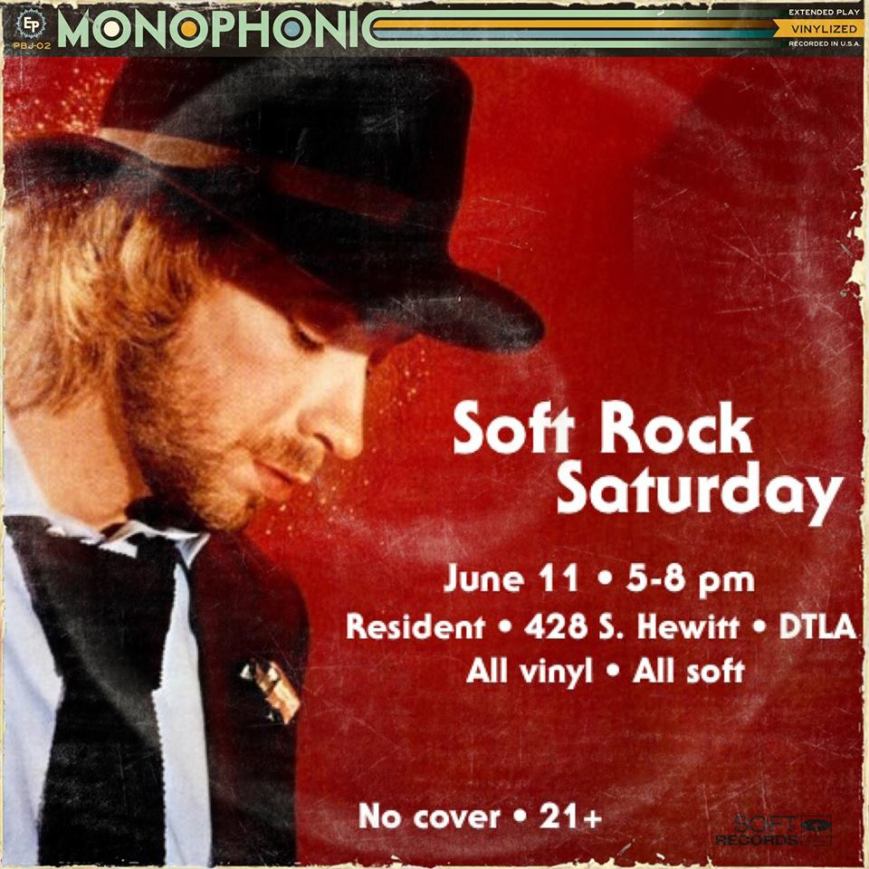
Soft Rock

Wow. I think I would rather die, personally. Note that it is one block away from the old Al’s Bar. We’d park on Hewitt and head to Al’s to have our ears blasted by the crazy punk rock, three or four bands a night. I remember seeing a dead guy on the 400 block of Hewitt once. Must have been two in the morning. Our ears were ringing. Is he drunk? A cop nudged him with his boot. He didn’t wake up. The night air reeked of urine and Thunderbird and bats darted in and out of abandoned factories. Lamp posts and telephone poles threw moonlit shadows. I wonder who he was someone asked. No one answered. We were drunk and laughing and he was dead and that is just how things were before the soft rock revival.

Soft rock

And I swore I would never write about the Shaggs, again

(2015)

So I’m outside the pad here and a car goes past blasting My Pal Foot Foot. Loud. Way loud. Even set off the (admittedly hair trigger) alarm on the neighbor’s SUV. I bet that never happened in your neighborhood, a whooping old school car alarm set off by the Shaggs. I bet it never even happened in your universe. It did here, in mine. Terrified, I ran inside, shut the curtains and waited for the Four Horsemen. They never came of course. Instead I’ve had the Shaggs bouncing off the inside of my skull all afternoon. A shambling, down beat stuttering, in tune only on Jupiter (or beyond) kind of earworm, alleviated only by the world’s greatest trumpeter next door stretching A Night in Tunisia on the rack. The tune cracks, bleeds notes, then dies a descending death where the bridge ought to be. I make the sign of the cross and light a candle.

And now this post is the second time I’ve written about the Shaggs. Here was the first.

Jay’s Jayburger

Jay’s, man, how could I forget? It was at Virgil and Santa Monica, across the street from the 7-11 where you’d see crack sold in the open out front (the 7-11 nearby at Normandie and Sunset had ass sold in the open out front), and then on the other corner back a bit was the Garage, the club of the moment. Used to be a bar for the LACC profs, the name of which escapes me, and then a bathhouse called the Bunkhouse–you could still see where the baths had been–but all those guys died and it eventually became a rock’n’roll bar. There’d always be some shit band on the bill somewhere and while they were playing me and the Pope (aka Greg, but known to all as the Pope) would suddenly get the munchies and split across the street for the eats. I always got a burger and two milks, which the Pope found funny. (Milk? Really? A big guy like you?) He got two burgers and a soda. If Fyl was there she got her burger without chile, but everyone else got the chile. Better than Tommy’s, we’d say. Everybody said that. Jonathan Gold said that. It was an old school burger joint with seats on the outside and there was a bit of a gang war going on in the neighborhood and at least once the place was swept with bullets, so you kept an eye out for slow moving cars full of evil types. But then you did that anywhere in LA back then, it was Murder City USA for a few years. Hard to imagine that now.

It’s also hard to imagine a Jay’s now…hamburgers are hip things, upscale, odd.  And the neighborhood is too, mostly. Hard to gangbang when all your neighbors are lawyers and actresses. Sometimes the neighborhood is so safe I feel alienated. I’m not, really, but nostalgia softens edges and bodies in the street become less dead and more just a thing blocking your way to the Coconut Teaszer. (Though it’s harder to forget the hot air leaking out of the bullet hole in the skull into the chilly night air.) But that was in Hollywood, and Jay’s was in Virgil Village, or used to be, it’s all Silver Lake now. Not even Silverlake, but Silver Lake. Two words, as if that upper case L gave it class. I suppose it does, if that’s your thing.

Jay’s went under a long time ago, way back before the recession, when the landlord had some demented idea for a ghastly mini mall. Ugly thing it is, with what used to be Jay’s now a taqueria. The 7-11 is nice now, clean, crack free. The Garage is now a way hip bar the name of which escapes me…sometimes you’ll see nice young people in line outside, waiting to get in. Kids are so nice anymore, so polite. They just had their burger–without chile, sometimes without even meat–at Umami over on Sunset, which is fine. A nice place, tasty, but no Jay’s Jayburger, chile squeezing out from under the bun, a couple hotter than hell peppers, and a milk to settle it all down with. I drive home now late from some jazz spot and sit inevitably at the light there at Virgil and Santa Monica and remember the taste of the burger, the tough guy talk, the laughs, the music loud as hell at the Garage. Scenes are so alive at one point, so vital, it’s like they’ll never end. But they do, with a whimper, never a bang, like they never were. It’s always been like that, and always will be. When all us old geezers gather round some cheap beer we tell tales of those times, a lot of them funny, some even true. None of them important, really, but we tell them anyway, and sometimes I write them down, like this, which makes them history, sort of. I never tell anyone that I’ve written them down, though. Because memories are fun, but being history hurts.

Thirty years ago

Black Flag at The Palladium way back when.

Black Flag at The Palladium in faraway times.

I remember that night. They wouldn’t let us in. Even with our tickets. I guess they thought there was gonna be a riot. Which there was, later. We weren’t in it, though. We were over at the Firefly on Vine, where my wife punched a dude out. Sent him flying. He was asking for it. Those were the days.